
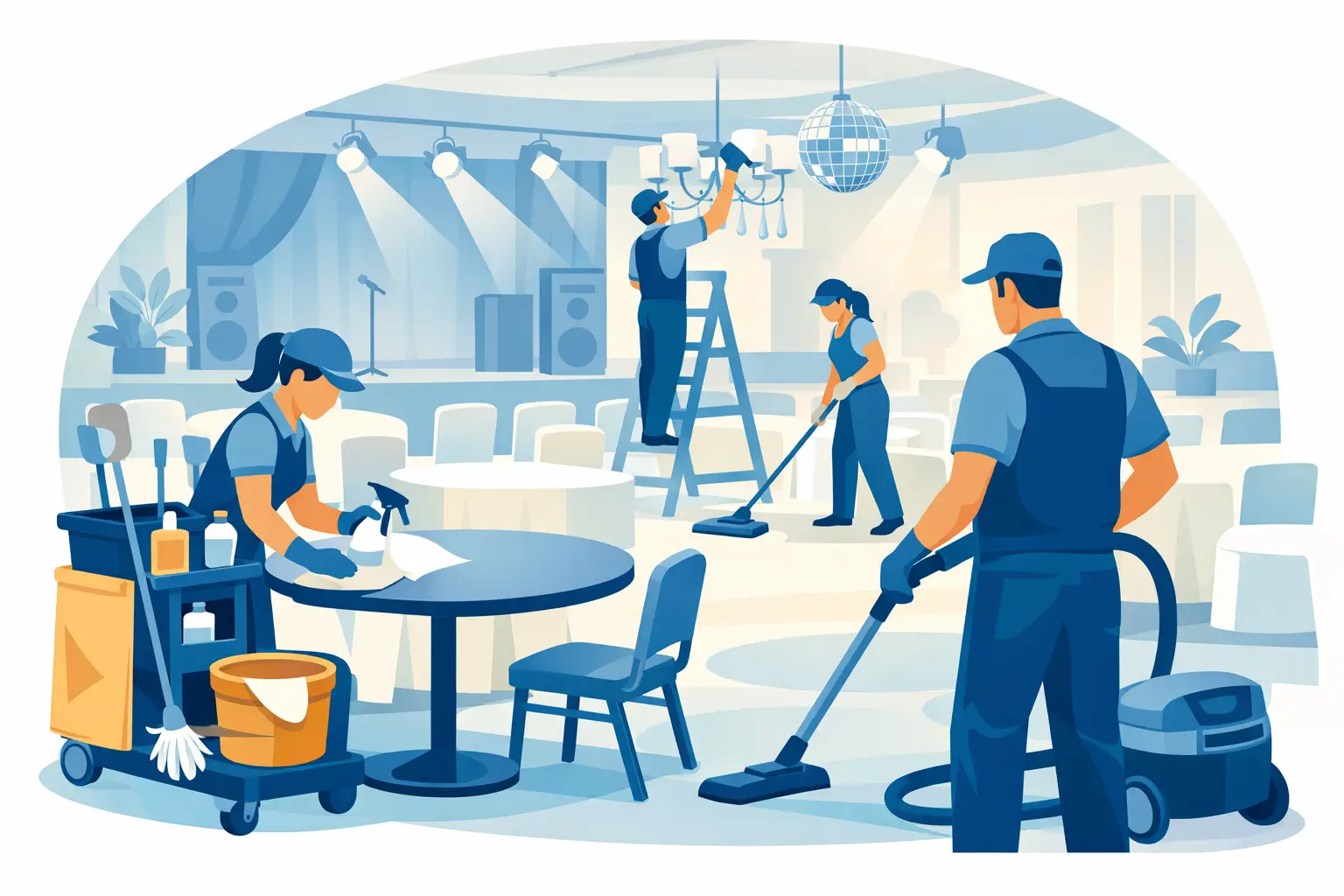
When a venue has hosted 200 guests, a wedding breakfast, a late bar and a quick room turnaround the next morning, the best way to clean event venues is never just about mops and bins. It is about timing, sequence and making sure the space is ready for the next booking without disrupting staff, suppliers or paying guests.
Event spaces are different from standard commercial sites because the mess changes every time. One night it is glitter, glassware marks and sticky flooring. The next it is muddy footprints, overflowing washrooms and catering waste. That is why venue cleaning needs a method that can adapt quickly while still covering the basics properly.
What is the best way to clean event venues?
The most effective approach is to clean in stages. Start with a rapid post-event reset to remove waste and obvious hazards, then move into a detailed clean of high-contact and high-visibility areas, and finish with checks that confirm the venue is ready for use. That sounds simple, but the difference is in how well the work is planned.
A good venue clean should follow the flow of the site. Entrances, bars, toilets, seating areas, dance floors, back-of-house spaces and exits all get dirty in different ways. If cleaners move through the building in the wrong order, they waste time and risk recontaminating areas that have already been finished.
For most venues, the right sequence is top to bottom and clean to dirty, while also prioritising safety risks first. Spills, broken glass and washroom hygiene come before polishing mirrors or straightening furniture. Presentation matters, but safety and usability come first.
Why event venues need a different cleaning plan
A venue is judged quickly. Guests notice sticky floors, unpleasant toilets and marked glass almost immediately. Site managers notice whether the room is genuinely reset for the next event or whether staff are left sorting chairs, emptying bins and chasing missed details.
The cleaning plan also has to match the event type. A corporate conference usually creates lighter waste but leaves tables, touchpoints and washrooms in constant use. A party or wedding can leave heavier spillages, food debris and more pressure on carpets and hard flooring. A sports club function may bring in mud and heavy traffic at entrances. There is no single checklist that works for every booking.
This is where staffing levels matter. A smaller function may only need a short post-event clean and a morning check. A large event with catering, bar service and high footfall may need a bigger team on site immediately after close. The best results usually come from assessing the venue size, event format and turnaround window in advance.
Best way to clean event venues without delaying the next booking
Speed matters, but rushing usually creates rework. The practical answer is to divide cleaning into priority zones and assign staff clearly.
One part of the team should deal with waste collection and obvious debris first. This clears the site quickly and makes the rest of the clean safer. Another can start washrooms, because these often need more than one pass after a busy event. A third can focus on front-of-house presentation such as floors, tables, chairs, mirrors and entrance areas.
That division is especially useful when a venue has an early setup the next day. Instead of waiting for one cleaner to move around the whole building, several people can work at the same time in the right order. The result is a faster clean with fewer missed areas.
Floor care usually takes the most time and has the biggest visual impact. Hard floors may need sweeping, mopping and spot treatment for sticky drink residue. Carpets may need a thorough vacuum and targeted stain work. The right method depends on the surface and the spill. Too much water on the wrong floor can cause damage or leave slip risks, so products and equipment need to match the site.
The areas that make or break venue standards
In practice, a few areas tend to decide whether a venue looks professionally cleaned or not. Toilets are one. If washrooms are not sanitised, restocked and checked for odour, the whole venue feels poorly managed.
Entrances and exits are another. Guests and clients see these first, and they collect dirt quickly. Finger marks on glass, litter near doors and worn-in debris at matting give the wrong impression before anyone reaches the main room.
Bars and catering areas need careful attention because they combine hygiene, presentation and residue build-up. Sugary spills, bottle waste and grease can all sit side by side. These areas need more than a basic wipe-down, particularly after evening events.
Furniture reset also matters more than many venues expect. Even when the surfaces are clean, a room can still look unprepared if chairs are misaligned, tables are not reset and bins are not fully cleared. Cleaning and room readiness are closely linked in event spaces.
Choosing the right time to clean
The best cleaning window depends on what happens next. Some venues benefit from an immediate overnight clean so the building is fully reset before staff return. Others need a split approach, with the main post-event clean completed at night and a short final check carried out the next morning.
That second check is often worth doing. Dust settles, bins may need one last change and washrooms may require a quick refresh before doors open again. For venues with back-to-back bookings, a final inspection can prevent avoidable complaints.
Out-of-hours cleaning is usually the most practical option because it limits disruption. It also allows larger tasks such as floor treatment or more detailed washroom work to be completed without guests and staff moving through the area.
Equipment and products matter, but method matters more
There is a tendency to focus on products, but the real issue is whether the cleaning team is using the right method for the site. A venue with mixed flooring, soft furnishings, toilet blocks and food service areas needs a proper combination of tools and chemicals, used safely and in the right order.
For example, over-wetting a carpet to chase a stain before a morning event can create a different problem. Using the wrong chemical on a polished surface can leave smears. Cleaning teams need to know when a quick turnaround clean is enough and when a deeper clean should be scheduled between bookings.
That is also why site knowledge helps. A team that knows the venue layout, access points, waste storage areas and pressure points can work faster and more accurately than one starting from scratch every time.
When to use an outsourced commercial cleaning team
Some venues handle light daily cleaning in-house, but larger events often need extra support. If internal staff are already covering setup, customer service and close-down tasks, asking them to complete a full venue clean can slow the whole operation and lead to inconsistent standards.
An outsourced commercial cleaning team is usually the better fit when event schedules change, guest numbers vary or cleaning is needed late at night or early in the morning. It gives site managers more flexibility and makes it easier to scale staffing to the booking.
For venues in Peterborough and surrounding areas, that local response can be particularly useful when a late finish, unexpected spill or short turnaround changes the plan. A cleaning service that can assess the venue, recommend staffing levels and work around operating hours is often more practical than trying to force a fixed routine onto a variable site.
What site managers should look for in a cleaning plan
A workable plan should be straightforward. It should set out which areas are cleaned after every event, which tasks are periodic rather than nightly, how washrooms and waste are handled, and what happens when an event overruns or finishes later than expected.
It should also be realistic about turnaround times. If a large function ends at midnight and the room is needed again at 8am, the cleaning requirement needs to reflect that pressure. Understaffing a venue clean may look cheaper at first, but it often costs more in complaints, delays and rushed staff the next day.
The best way to clean event venues is to treat cleaning as part of operations, not as an afterthought once the guests have gone. When the sequence is right, the staffing is right and the checks are done properly, the venue stays safe, presentable and ready for business. That is what matters when the next booking is already on the calendar.