
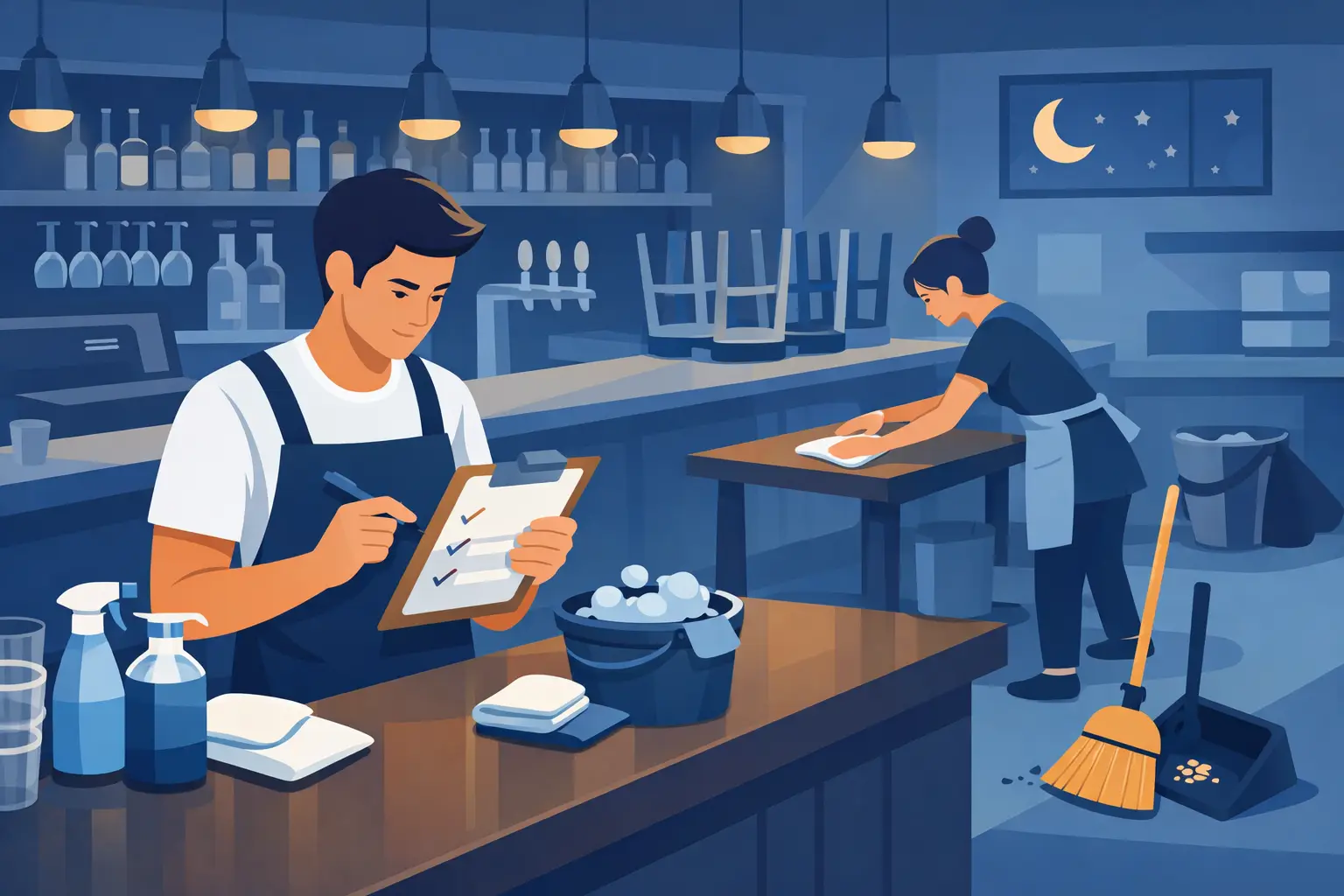
The last customer has gone, the till is being counted, and the team want to get home. That is exactly when a bar cleaning closing checklist matters most. Without one, the close gets rushed, standards slip, and the next shift starts with sticky floors, cloudy glassware and hygiene issues that cost time to put right.
For bar managers and operators, the aim is not to create more paperwork. It is to make sure the same essential cleaning jobs happen every night, in the right order, with enough detail to protect hygiene, presentation and opening readiness. A good close also reduces pest risk, helps equipment last longer and makes early service less chaotic.
Why a bar cleaning closing checklist matters
Bars are hard-working spaces. Spills build up across the evening, bins fill quickly, washrooms take repeated traffic, and back-of-house areas can get missed because they are out of sight. If cleaning is left to memory, people naturally focus on what is obvious and skip what is awkward, time-consuming or unpopular.
A written checklist fixes that. It gives shift leads a clear standard, helps new staff understand expectations and makes it easier to spot recurring issues. If one area is regularly being left, that is usually a staffing, timing or process problem rather than a one-off mistake.
It also helps with accountability. In busy hospitality settings, there is a difference between “we cleaned down” and “the bar tops, sinks, drains, beer taps, bottle fridges and floors were all completed and checked”. The second standard is what keeps a venue presentable and operational.
What a closing checklist should cover
A useful checklist should follow the way the site actually closes. If it is too detailed, staff stop using it properly. If it is too vague, it becomes meaningless. Most bars need the close broken into customer-facing areas, service areas, washrooms, waste handling and final security checks.
The other point is timing. Some jobs can start during the final hour of trade without affecting customers. Others must wait until the floor is clear. Separating those tasks helps avoid a pile-up at the end of the night.
Front-of-house cleaning at close
Customer areas shape first impressions, so they need more than a quick sweep. Tables and chairs should be cleared, wiped and sanitised, with spill marks and sticky residue removed fully rather than spread around with a damp cloth. Booths, ledges, menus, card machines and any touchpoints used regularly during service should also be cleaned.
Floors deserve particular attention. Spot-mopping one visible spill is not the same as a proper end-of-night clean. The close should include a full sweep, removal of debris under furniture, and mopping with suitable products for the flooring type. If the venue has dancefloor areas, entrances or queue points, these often need extra work because dirt and drink residue build faster there.
Glass and mirrors should be checked before sign-off. Smears around the entrance, back bar mirrors and internal glazed partitions make a venue look neglected, even when most of the cleaning has been done well.
Behind the bar
This is usually where standards either hold or slip. Bar tops need a full clean and sanitise, including drip trays, speed rails, garnish stations and till surrounds. Any fruit, syrups or perishables left out should be cleared, disposed of or stored correctly in line with site procedures.
Beer taps and nozzles should be wiped down, and sinks cleaned with special attention to drains where residue and odour can build quickly. Bottle fridges need a nightly check for broken glass, spillages and expired stock. It does not always mean a full internal deep clean every night, but visible dirt and sticky shelving should never be left until later.
Small equipment is another common weak point. Scoops, mats, measures and pourers all need cleaning, not just the surfaces around them. When those smaller items are ignored, the bar may look tidy from a distance while still failing basic hygiene expectations.
Glassware and wash areas
Poorly managed glasswash areas create problems for the next day very quickly. Clean glasses should be stored dry and correctly, not stacked wet where odours and marks can develop overnight. Damaged glassware needs to be removed from circulation straight away rather than left for someone else to deal with.
The glasswasher itself should be checked at close. Filters, spray arms and internal surfaces can collect debris and limescale. A nightly routine will not replace planned maintenance, but it does prevent avoidable build-up and helps the machine keep delivering a clean finish.
This is also one of those areas where the right level of cleaning depends on trade volume. A quiet lounge bar has different demands from a high-turnover late venue. The checklist should reflect that, otherwise staff either over-clean unnecessarily or miss what a busy site genuinely requires.
Bar cleaning closing checklist for back-of-house areas
Storage rooms, cellars, prep spaces and staff-only corridors should not be treated as optional extras. These spaces affect hygiene, stock condition and safety, even though customers never see them. Floors should be kept clear, waste removed, and spillages dealt with properly rather than left because the area is “only for staff”.
Cellars and keg rooms need a sensible routine. They may not require a full clean every single night, but access routes should stay safe and dry, and any signs of leakage or residue should be reported and addressed. If the close includes line cleaning on certain days, that should sit on the checklist clearly so nobody assumes it has been done.
Staff break areas and back doors also deserve a quick final check. These are often the places where rubbish collects and where pests can find easy access if food waste or bags are left overnight.
Washrooms and hygiene checks
If washrooms are still in poor condition after close, it undermines everything else. Toilets, urinals, sinks, taps, mirrors and dispensers should all be cleaned and checked. Consumables need restocking so the opening team does not start the day already behind.
Floors in washrooms should be cleaned thoroughly, not just around visible marks. Cubicle locks, flush handles and door plates are high-touch points and should be part of the routine. A final odour check is worthwhile too. Smell is one of the first things customers notice, and one of the hardest things to hide with a quick fix.
Waste, floors and final checks
Waste handling is a key part of any bar cleaning closing checklist because it affects hygiene, smell and pest control. Bins should be emptied, cleaned if needed and relined. External bin areas should be left secure and tidy rather than turned into a holding point for leaking sacks and empty boxes.
The final floor clean should happen once waste has gone and equipment has been put back properly. That order matters. There is little value in mopping first and then dragging more debris through the area while taking rubbish out.
Before lock-up, there should be one last walk-through. Lights, doors, alarms and obvious maintenance issues all need checking, but so do cleaning standards. If a manager only looks from the doorway, they will miss the sticky patch under the bar fridge or the bag of rubbish left near the rear exit.
Making the checklist work in practice
The best checklist is one the team will actually use. Keep it site-specific and realistic for the number of staff on close. If one person is expected to cash up, stock down, clean the whole bar and finish the washrooms in too little time, the problem is resourcing, not attitude.
It helps to assign areas clearly. One person may take front-of-house, another the bar and glasswash area, and a supervisor complete the final sign-off. That does not need to be complicated, but it does need to be consistent.
A periodic external review can also help. For some venues, particularly those with long trading hours or inconsistent staffing, bringing in professional support for scheduled deeper cleaning takes pressure off the nightly close and keeps standards from sliding over time. For operators in Peterborough managing bars, clubs or event spaces, that can be the difference between a team that is always catching up and a venue that stays under control.
The real test of a closing routine is simple. When the doors open the next day, the venue should feel ready, safe and properly maintained without a scramble to correct last night’s misses. That is what a checklist is there to deliver.