
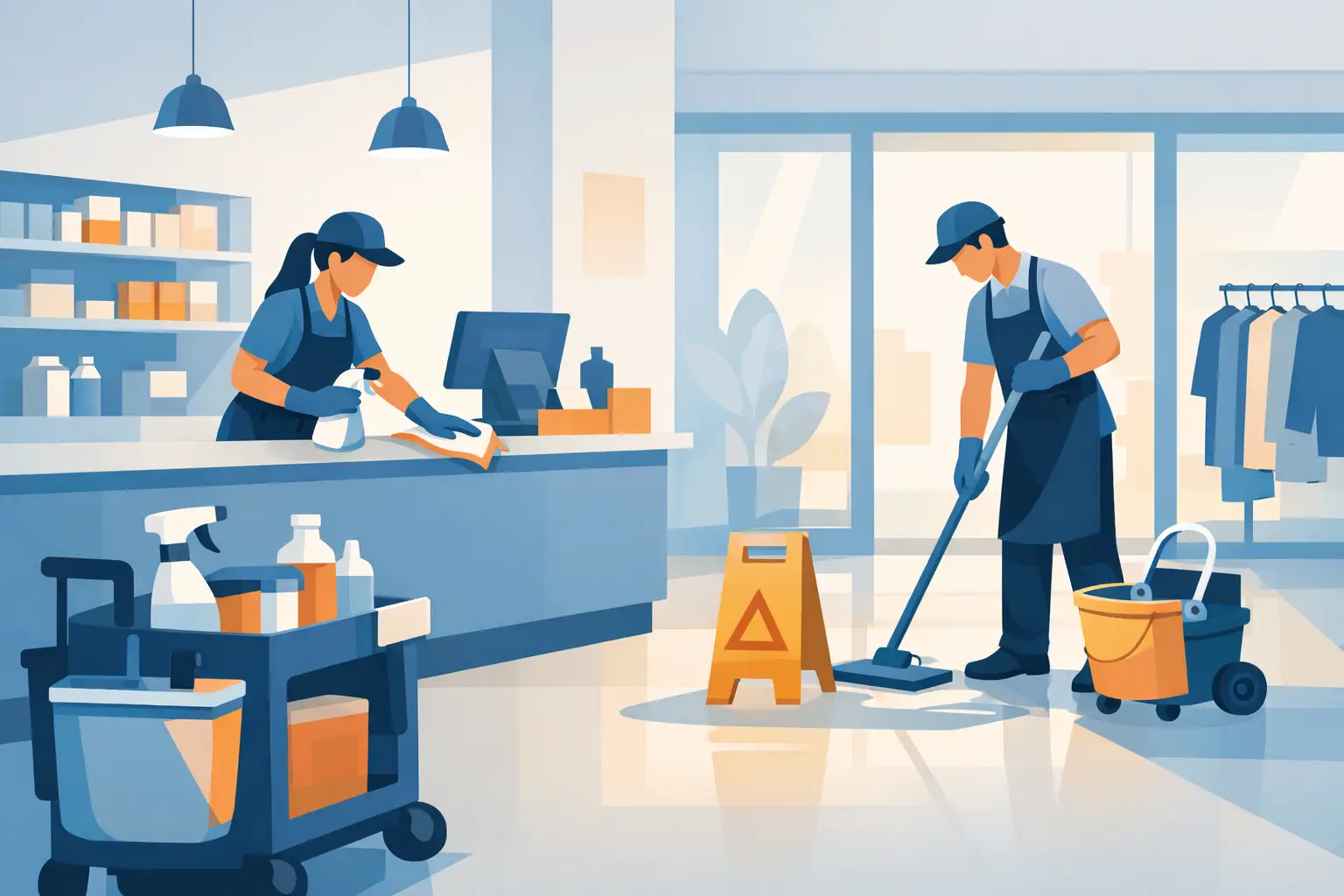
The first ten minutes of trading can set the tone for the whole day. If the entrance glass is marked, the floor still shows yesterday’s foot traffic, or the tills are surrounded by dust and packaging, customers notice straight away. That is why shop cleaning before opening matters – it gives staff a clean, safe and presentable space before the first customer walks through the door.
For most retailers, this is not about making the premises look spotless for its own sake. It is about readiness. A clean shop floor reduces slip risks, cleaner touchpoints support hygiene, and tidy displays help the team start serving customers without losing time to last-minute jobs. When opening routines are rushed, cleaning is often the first thing that gets cut short. That usually shows.
Why shop cleaning before opening matters
Cleaning before trading hours gives you a controlled window to get the job done properly. There are no customers to work around, no interruptions at the entrance, and no need to clean one section while another is actively in use. In practical terms, that means better results in less time.
There is also a clear operational benefit. Staff should not be splitting their attention between opening tills, checking deliveries, setting out stock and trying to mop the floor to a safe standard. When cleaning is handled before opening, the team can focus on service and sales from the moment the doors open.
The standard required will vary by site. A small independent shop may need a fast, consistent daily clean that covers the entrance, floors, counters and staff areas. A larger retail unit may need more labour, more time and a more structured routine, especially where there are fitting rooms, customer toilets or high footfall entrances. The point is not to apply the same checklist everywhere. It is to make sure the cleaning fits the shop.
What shop cleaning before opening should cover
The entrance should always come first. It is the area customers judge immediately, and it often picks up the most visible dirt from weather, foot traffic and deliveries. Glass doors, handles, frames, mats and any hard flooring need attention before trading starts. If the front of house looks neglected, the rest of the shop already feels lower standard.
The shop floor comes next. Dust, debris and marks build up quickly, especially in busy retail environments. A proper pre-opening clean usually includes vacuuming or mopping, spot cleaning where needed, and making sure walkways are clear and safe. This is especially important in wet weather, when entrances can become hazardous within a short period.
Counters, payment areas and customer touchpoints should also be cleaned as part of the routine. Card machines, till surrounds, counter edges, door handles and handrails are used constantly. If they are sticky, dusty or visibly marked, it affects the customer experience and sends the wrong message about standards.
Shelving and displays depend on the type of shop and the stock being sold. In some retail settings, daily dusting is needed to keep products looking fresh. In others, a lighter daily clean with more detailed periodic work may be enough. It depends on traffic, layout and how quickly dust shows on surfaces and stock.
Back-of-house areas should not be ignored just because customers do not see them. Staff kitchens, toilets, stockrooms and corridors still affect hygiene, morale and day-to-day operations. If the stockroom floor is dirty or waste has not been dealt with, that usually creates knock-on problems later in the day.
Common problems with in-house opening cleans
A lot of shops rely on staff to clean before opening. Sometimes that works, especially in very small premises with a simple layout. More often, it becomes inconsistent. If one team member is off, a delivery arrives early, or the store is short-staffed, the cleaning standard drops almost immediately.
There is also the issue of accountability. If cleaning is just one of several opening tasks, it is hard to know whether it was done thoroughly or simply ticked off. Floors may be swept but not properly cleaned. Touchpoints may be missed. Waste may be removed from one area but left in another. These are small misses on their own, but together they change how the premises look and feel.
Timing is another common issue. Pre-opening windows are often tight. If staff are due on shift shortly before the doors open, there is limited time to clean safely and properly. Rushed mopping can leave wet floors. Poor sequencing can mean one area is cleaned while another is still cluttered with stock cages or packaging. A structured commercial clean usually avoids these problems because the work is planned around the opening time, not squeezed into it.
Building a realistic pre-opening routine
The best routine is the one that your site can maintain consistently. That means matching the cleaning schedule to the layout, footfall and risk points of the premises rather than aiming for an unrealistic ideal.
For some shops, a daily pre-opening clean should focus on visible customer areas and hygiene-critical touchpoints, with deeper work arranged weekly or monthly. For others, especially sites with long opening hours or heavy daily traffic, a more thorough clean every morning may be necessary. Shops near main roads, transport routes or busy town centre locations often need more frequent attention simply because dirt comes in faster.
It helps to think in zones. Front entrance, shop floor, counters, fitting rooms, staff facilities and stock areas all have different cleaning needs. Once those zones are clear, it becomes easier to set staffing levels and time requirements. This is where a site assessment can be useful, because what seems like a one-hour job on paper may need more coverage in practice.
Health, safety and presentation go together
It is easy to treat cleaning as a presentation issue, but in retail it is also a safety issue. Wet entrances, dusty corners, cluttered back rooms and poorly maintained toilets all create avoidable problems. Cleaning before opening gives you the safest opportunity to reduce those risks without working around customers.
This matters even more in winter, during promotions, and at peak trading periods. Extra footfall means more dirt, more moisture and more pressure on the premises. If the cleaning routine does not adjust, standards slip quickly. A shop that was manageable during a quiet week can become difficult to keep on top of during a sale or seasonal rush.
There is also a staff benefit. Teams are more likely to maintain standards during the day when they start in a clean environment. If they begin the morning already dealing with leftover mess, the site rarely catches up.
When outsourced support makes more sense
If your opening clean is regularly inconsistent, dependent on whoever is on shift, or causing delays to the start of trade, it is worth looking at dedicated support. A commercial cleaning provider can work outside operating hours, bring the right number of cleaners for the site, and set a routine that reflects the actual demands of the premises.
That does not mean every shop needs a large contract or a complex service plan. In many cases, the right arrangement is simply reliable cover at the right time of day. Some sites need daily visits, others need support on specific trading days, and some need a combination of routine cleaning with occasional deeper work. It depends on the premises, the staffing model and how much public use the site gets.
For businesses in Peterborough and surrounding PE areas, that flexibility can be the difference between a cleaning service that works on paper and one that works in practice. Peterborough Business Cleaners supports commercial sites with practical scheduling based on opening times, staffing needs and the realities of the premises.
What to look for in a pre-opening cleaning service
Reliability comes first. If cleaners arrive late, miss visits or work to an inconsistent standard, the whole point of a pre-opening clean is lost. The service has to fit your operating hours and leave the site ready before staff and customers arrive.
You also need a provider that understands commercial environments, not just general cleaning tasks. Retail spaces have customer-facing standards, high-touch areas, changing footfall and narrow time windows. A good service will account for those pressures rather than offering a generic package.
Clear communication matters as well. If access arrangements change, trading hours shift or additional work is needed after a busy period, you need a team that can respond quickly. A rigid service often creates more admin than it saves.
Shop cleaning before opening works best when it is treated as part of daily operations, not an afterthought. A clean entrance, safe floors and well-kept customer areas do more than improve appearance – they help the day start properly, with fewer distractions and fewer avoidable problems. If the current routine is inconsistent, late or too dependent on available staff, that is usually the point where a more reliable setup starts paying for itself.
A shop does not need perfection every morning, but it does need to open ready for business.