
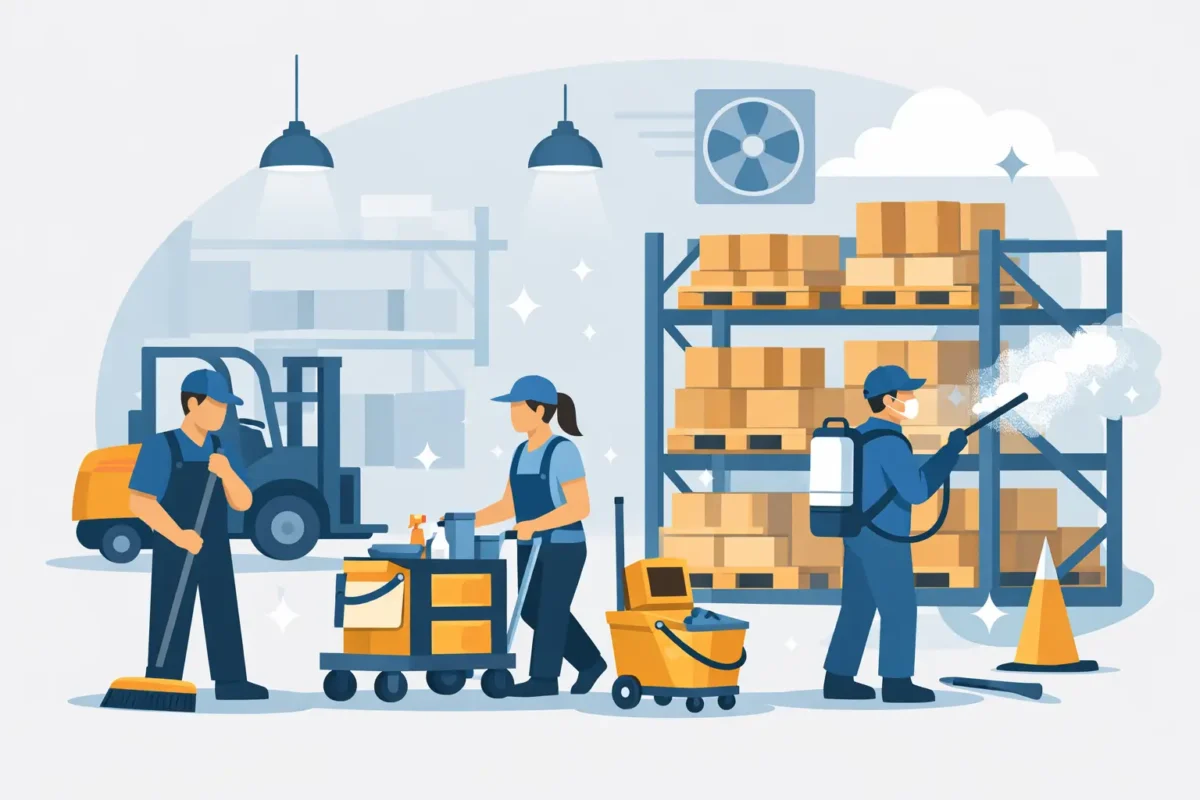
A warehouse floor can look clear at the start of a shift and still create risks by lunchtime. Forklift tyres bring in grit, packaging breaks down around picking areas, and dust settles on racking, lights and stock. The best warehouse cleaning methods deal with those daily realities without interrupting goods in, picking or dispatch.
For most sites, the right approach is not a single deep clean. It is a planned combination of routine floor care, targeted cleaning in high-traffic areas, safe high-level work and regular inspections. The detail will depend on your layout, stock, equipment and operating hours.
Start with a cleaning plan built around operations
Warehouse cleaning should follow the way the building is used. A busy dispatch lane needs different attention from a bulk-storage aisle, while a food or pharmaceutical environment will have stricter hygiene requirements than a general distribution unit.
Walk the site and identify where dirt is created, carried or allowed to build up. Loading bays, entrances, battery-charging areas, packing benches, staff facilities and waste points are usually priority zones. Mark pedestrian routes, forklift lanes, fire exits, spill-kit locations and emergency equipment so they are never blocked during cleaning.
A simple schedule works best when it separates daily, weekly and periodic tasks. Daily work should control the hazards that develop quickly, such as loose debris, spills and dirty washrooms. Weekly work can cover racking bases, doors, skirting, machinery exteriors and hard-to-reach corners. Periodic work is for high-level dust, deeper floor treatment and areas that need access equipment or a temporary exclusion zone.
The key is to arrange cleaning around quieter periods where possible. Early mornings, evenings, overnight shifts or planned shutdowns can allow cleaners to work properly while reducing disruption to warehouse teams.
Best warehouse cleaning methods for each area
Mechanised floor cleaning for large spaces
For most warehouse floors, a combination of industrial sweeping and scrubber-drying is the most effective method. A sweeping machine removes grit, pallet fragments, cable ties, shrink wrap and general debris before it is ground into the floor. A scrubber dryer then washes the surface and recovers the dirty water, leaving the floor ready for use far faster than a mop-and-bucket approach.
This matters because wet floors around forklifts and pedestrians create an immediate slip risk. A machine should be sized for the space: a compact walk-behind unit can suit narrow aisles and smaller units, while a ride-on machine may be more efficient in a large distribution warehouse. The trade-off is access. Large machines work well in open areas but cannot replace detail cleaning around racking legs, dock levellers and equipment.
Use a cleaning chemical that matches the floor type and the soil. Concrete, sealed concrete, resin and safety flooring all respond differently. Applying too much detergent can leave residue that attracts more dirt or makes a surface slippery, so correct dilution and recovery are essential.
Spot cleaning and spill response
Spills should be dealt with when they happen, not left for the next scheduled round. Oil, water, damaged goods and leaked chemicals need an immediate response that protects staff and prevents contamination spreading across the site on footwear or vehicle tyres.
Keep suitable spill kits in known, accessible places and make sure employees know who to contact. The response may involve absorbent material, a wet vacuum, chemical-neutralising products or specialist cleaning. Where a substance is hazardous, follow the product safety information and site procedures rather than treating it as an ordinary floor-cleaning job.
Spot cleaning also applies to packing stations and loading areas. Removing loose tape, cardboard and plastic film regularly reduces trip hazards and helps prevent waste being caught in wheels or machinery.
Racking, shelving and stock-area cleaning
Dust and debris collect at racking bases, behind pallets and on shelving where routine floor machines cannot reach. These areas need manual attention using industrial vacuums, brushes or low-level dusting tools. Cleaning around racking also makes it easier to spot damage, leaks, pest activity or misplaced stock.
Do not clean loaded racking without agreeing a safe method first. Staff should not climb racking or use unsuitable ladders to reach upper levels. If stock has to be moved, this should be coordinated with warehouse management so picking, stock control and safety are not compromised.
For warehouses storing food, drinks, healthcare products or sensitive components, dust control is particularly important. In these environments, cleaning frequencies may need to be increased and documented as part of wider quality procedures.
High-level dust removal
High-level cleaning covers beams, pipework, ducting, light fittings, sprinkler heads, overhead conveyors and the top levels of racking. Dust at height does not stay at height. Vibration, air movement and forklift activity can bring it back down onto stock, work surfaces and floors.
This work should be planned carefully. Depending on the height and access, it may require vacuum systems with extension poles, a mobile elevated work platform or specialist access equipment. The area below should be controlled, stock protected where necessary and work scheduled away from active traffic routes.
Dry brushing at height can send dust into the air and create more cleaning work below. Controlled vacuum removal is usually the better option. It is also worth checking whether cleaning could affect fire detection or sprinkler systems before work begins.
Loading bays, entrances and external approaches
Loading bays are among the dirtiest parts of a warehouse. Rainwater, mud, tyre residue, diesel contamination and damaged packaging all gather where lorries are loaded and unloaded. Regular sweeping, drain checks and targeted degreasing help keep these areas safer and more presentable.
Entrances deserve the same attention. Effective entrance matting reduces the amount of moisture and grit carried into the building, but it only works when it is vacuumed and cleaned routinely. During wet weather, increase checks on entrances and pedestrian walkways rather than relying on a normal schedule.
Welfare areas and offices
A clean warehouse also depends on clean toilets, changing rooms, kitchens and offices. These areas are used throughout the day and can quickly affect staff comfort, hygiene and morale. They need proper cleaning and replenishment of consumables, not just a quick visual tidy.
Separate equipment should be used for washrooms, kitchens and production or storage areas to avoid cross-contamination. Colour-coded cloths and mops make this easier to manage and give supervisors a clearer standard to check.
Use the right equipment, but do not overcomplicate it
The most effective warehouse cleaning programme usually relies on dependable equipment used consistently. Industrial vacuum cleaners, sweepers, scrubber dryers, wet vacuums, microfibre systems and suitable spill-response materials cover many routine requirements.
More equipment is not always better. A ride-on scrubber dryer may be an excellent investment for a large open floor, but it is unnecessary for a small storage unit with narrow access. Likewise, pressure washing can be useful for certain external yards or heavily soiled surfaces, but it introduces water management, drainage and slip-risk issues. It should only be used where the surface, drainage and operating conditions allow it.
Train staff or cleaning operatives on safe use, battery charging, chemical dilution, pre-use checks and storage. Equipment that is poorly maintained can spread dirt, leave excess water behind or become a safety issue in its own right.
Monitor standards and adjust the frequency
A cleaning plan should be reviewed against what happens on site, not simply followed because it was written months ago. A change in shift pattern, higher order volumes, a new product line or poor weather can alter cleaning needs quickly.
Managers should carry out regular walk-rounds and look beyond whether the floor appears clean. Check for dust on racking, waste behind equipment, blocked fire exits, dirty entrance matting, marks on safety signage and build-up around charging points. Record recurring issues, then adjust the cleaning frequency or method rather than repeatedly treating the same symptom.
For sites using an external contractor, agree clear expectations from the outset. Define the areas to be cleaned, access arrangements, work times, equipment responsibilities and how issues are reported. A site visit is often the best way to establish the right staffing levels and cleaning hours before work starts.
Keep cleaning safe for people and stock
Cleaning activity can create hazards if it is rushed. Wet-floor signs, barriers and clear communication are basic controls, but timing matters just as much. Avoid cleaning active forklift routes unless the area can be managed safely, and never leave cables, machines or cleaning materials where they obstruct walkways or exits.
Chemicals should be labelled, stored securely and used according to their instructions. Cleaning teams need access to the relevant safety information and should know what to do in the event of a spill or exposure. Where stock is sensitive to moisture, odours or dust, agree protection measures before any deep cleaning begins.
A warehouse that stays clean is easier to run, safer to inspect and more pleasant for the people working in it. If your schedule is struggling to keep pace with operations, a tailored cleaning plan and an on-site assessment can provide practical cover without taking focus away from the job your warehouse is there to do.