
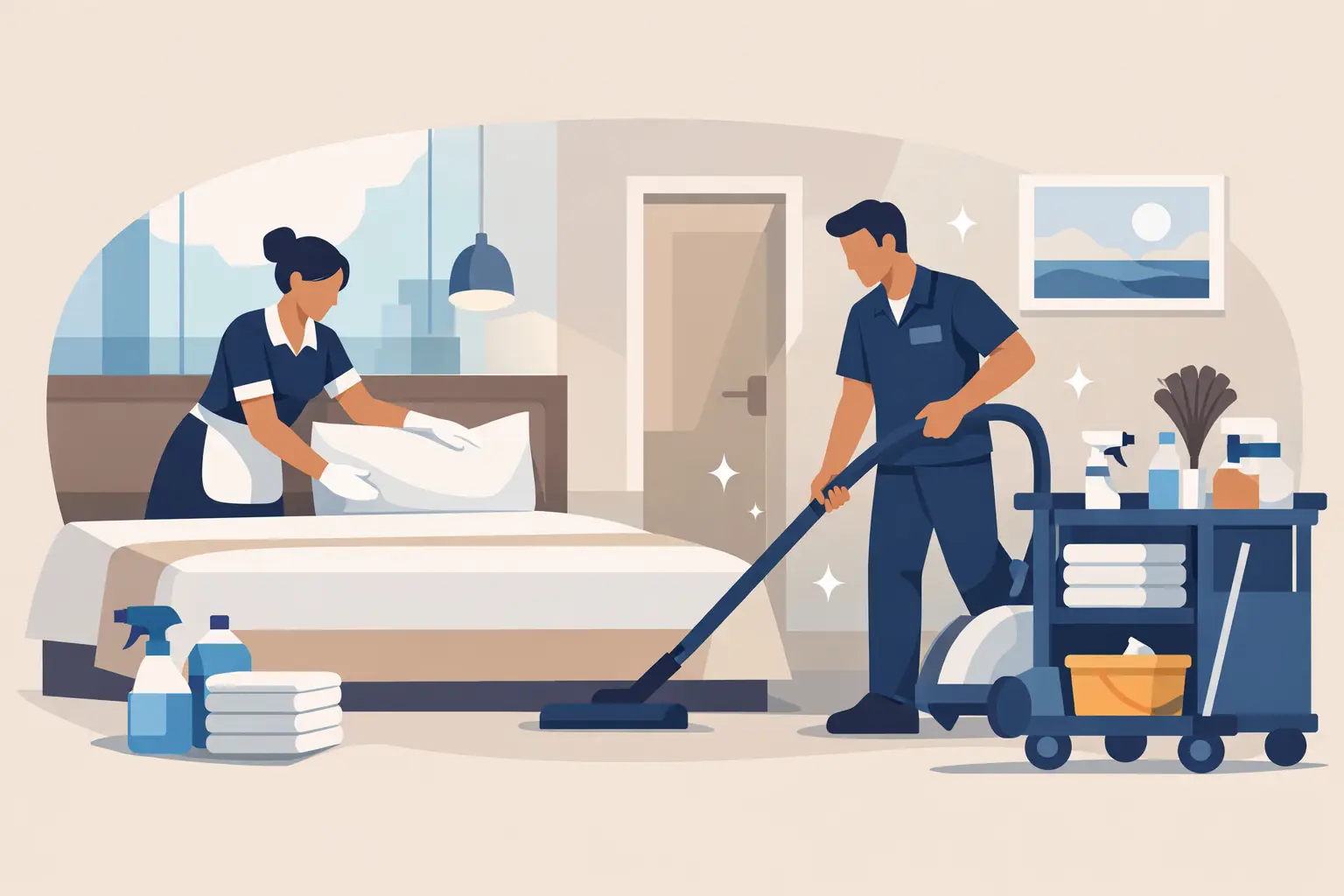
A full hotel can cope with a late arrival, a last-minute booking or a burst pipe. What usually causes pressure is a housekeeping team that is one or two people short when departures are stacked back-to-back. This guide to hotel housekeeping support is written for hotel owners, managers and operations leads who need practical cover that keeps rooms turning over, standards consistent and guests unaffected.
What hotel housekeeping support actually covers
Housekeeping support is not just extra pairs of hands to make beds. In a working hotel or B&B, it usually means planned or short-notice help with room cleaning, linen changes, bathroom sanitation, corridor and stairwell cleaning, public area presentation, consumables restocking and waste removal. Depending on the site, it can also include touchpoint cleaning in reception areas, back-of-house support and help after busy events or group check-outs.
The level of support needed depends on the property. A small B&B may only need cover during peak changeover days or holiday periods. A larger hotel may need regular outsourced support to bridge staffing gaps, deal with seasonal demand or stabilise standards across a larger room count. The right arrangement is the one that fits occupancy levels, check-out patterns and your in-house team’s capacity.
Why housekeeping support matters more than most hotels expect
Housekeeping affects almost every part of the guest experience, but it is often judged only when something goes wrong. A room that is not ready at check-in creates pressure at reception. Missed bathroom details lead to complaints. Delays in clearing corridors or restocking public toilets make the whole site feel less controlled.
There is also an operational cost. When housekeeping falls behind, managers are pulled off other duties, front desk staff end up managing cleaning queries, and maintenance issues may be spotted too late. Support is not simply about cleaning more rooms. It is about protecting the running of the property.
For many sites, flexible external support is more practical than carrying excess labour all year round. That is particularly true when occupancy is uneven, agency cover is unreliable, or staff absence creates immediate gaps.
A guide to hotel housekeeping support for busy periods
Busy periods expose weak planning quickly. Weekend weddings, coach bookings, school holidays and local events can all increase turnover in a short window. On paper, the staffing level may look fine. In practice, a higher number of departures, more frequent linen changes and a tighter check-in schedule can overwhelm the team.
This is where support needs to be organised around timing rather than just headcount. A hotel with 30 rooms may not need full-day cover if the pressure is concentrated between 9am and 3pm. Another property may need an early start for public areas and a later shift for post-event cleaning. The best support model reflects where the pressure actually sits.
It also helps to think beyond bedrooms. During high-footfall periods, guest toilets, lift areas, entrances and breakfast spaces can deteriorate quickly. If these areas are left to the same team trying to turn over rooms, standards can slip in both places.
The pressure points to plan for
The main pressure points are usually clustered departures, uneven room status updates, delayed laundry turnaround and last-minute occupancy changes. If your site regularly deals with these, then housekeeping support should be built into operations rather than treated as an emergency measure.
That does not always mean permanent outsourcing. It may mean having access to dependable cover that can be scheduled around known peaks and called on when occupancy or staffing shifts suddenly.
What good housekeeping support looks like in practice
Reliable support should reduce management effort, not add to it. If external cleaners need constant chasing, vague instructions or repeated corrections, the arrangement is not helping. Good support starts with a clear brief, but it also depends on cleaners who understand commercial expectations, room standards and turnaround pressure.
In practice, that means arriving on time, working to the agreed schedule, understanding which rooms take priority and maintaining consistent presentation across bedrooms and shared areas. It also means respecting the reality of hospitality sites – guests are present, front-of-house staff are working under time pressure, and delays have a knock-on effect.
A dependable provider should also be realistic. Some properties need full housekeeping cover. Others need support for specific tasks or days. A one-size package rarely works well in hospitality because room counts, layouts and occupancy patterns vary too much.
Standards matter more than speed alone
Fast cleaning is useful only if the room is guest-ready. Missed dusting, poor bathroom finishing or inconsistent replenishment creates rework, and rework is what pushes check-in readiness off track. Support should therefore be measured by both pace and finish.
For hotels, a clear room standard is essential. That might include bed presentation, mirror and glass quality, bathroom detail, bin emptying, amenity placement and floor finish. When standards are clear, support becomes easier to deploy because expectations are not left to guesswork.
When to bring in external housekeeping support
There is no single trigger, but there are clear signs. If supervisors are regularly cleaning rooms instead of managing the floor, if room release times are drifting later, or if guest complaints increase after busy weekends, the current setup is under strain.
Staffing gaps are another common reason. Recruitment in hospitality can be uneven, and absence can hit hard when teams are already lean. In those cases, external support gives you breathing room without forcing rushed hiring decisions.
Some sites also use support when standards need resetting. If room presentation has become inconsistent, a dependable external team can help steady operations while internal processes are reviewed.
For businesses in Peterborough and nearby areas, this can be especially useful during local event periods when accommodation demand rises and cleaning windows become tighter.
How to choose the right provider
The right provider should understand that hotel cleaning is not the same as office cleaning. Timing is tighter, standards are more visible and guest impact is immediate. Ask practical questions. Can they provide support at short notice? Can they scale staffing up or down? Do they understand room turnaround priorities and public area upkeep?
It is also worth asking how they assess the job. A site visit is often the best starting point because room numbers alone do not show the full picture. Layout, linen handling, access, parking, peak check-out times and the split between bedrooms and public spaces all affect labour needs.
Communication matters as well. You need a provider who can be reached quickly, confirm availability clearly and set out what they can realistically cover. Straight answers save time when the pressure is on.
Setting housekeeping support up properly
Even the best cleaning team works better with proper preparation. The brief should cover access, key control, priority rooms, linen arrangements, expected finishing standards and who signs rooms off. If there are problem areas, mention them early. That is better than correcting the same issue after the first shift.
It also helps to nominate one point of contact on site. Housekeeping support works best when instructions are direct and room status updates are clear. If requests come from several people at once, confusion follows.
Where support is ongoing, review the arrangement after the first few shifts. You may find the start time needs changing, or that public area cover is more useful than expected. A sensible provider will adapt the service around what the site actually needs.
The real value of flexible support
The strongest argument for housekeeping support is not simply cleaner rooms. It is operational stability. When rooms are turned over on time and shared areas are kept presentable, reception runs better, complaints reduce and managers can focus on the wider business.
That is why many hotels and B&Bs prefer flexible support rather than waiting for a staffing issue to become a service problem. A dependable commercial cleaning partner can provide cover that fits the property, whether that means regular scheduled help, seasonal support or short-notice attendance when the rota falls apart.
For hospitality businesses, consistency is what guests notice, even if they never see the team behind it. If your housekeeping operation is under pressure, the right support gives you room to stay in control.