A factory floor can look manageable at the end of a shift and still be carrying real risk. Dust build-up around machinery, spills in loading areas, residue in staff welfare spaces and neglected high-level surfaces all have a habit of becoming larger operational problems. That is why factory cleaning services are not simply about appearance. They are about keeping a working site safe, functional and ready for the next day.
For site managers and operations teams, the issue is rarely whether cleaning is needed. The real question is what level of cleaning is required, how often it should happen and how to get it done without interrupting production. In a factory environment, the right cleaning plan has to work around output, staffing, deliveries and maintenance windows.
What factory cleaning services should actually cover
Good factory cleaning services start with the realities of the site. A food-adjacent facility, engineering unit, packaging plant or general manufacturing space will not all need the same specification. Even within one building, standards often differ between production zones, storage areas, offices, washrooms and staff break rooms.
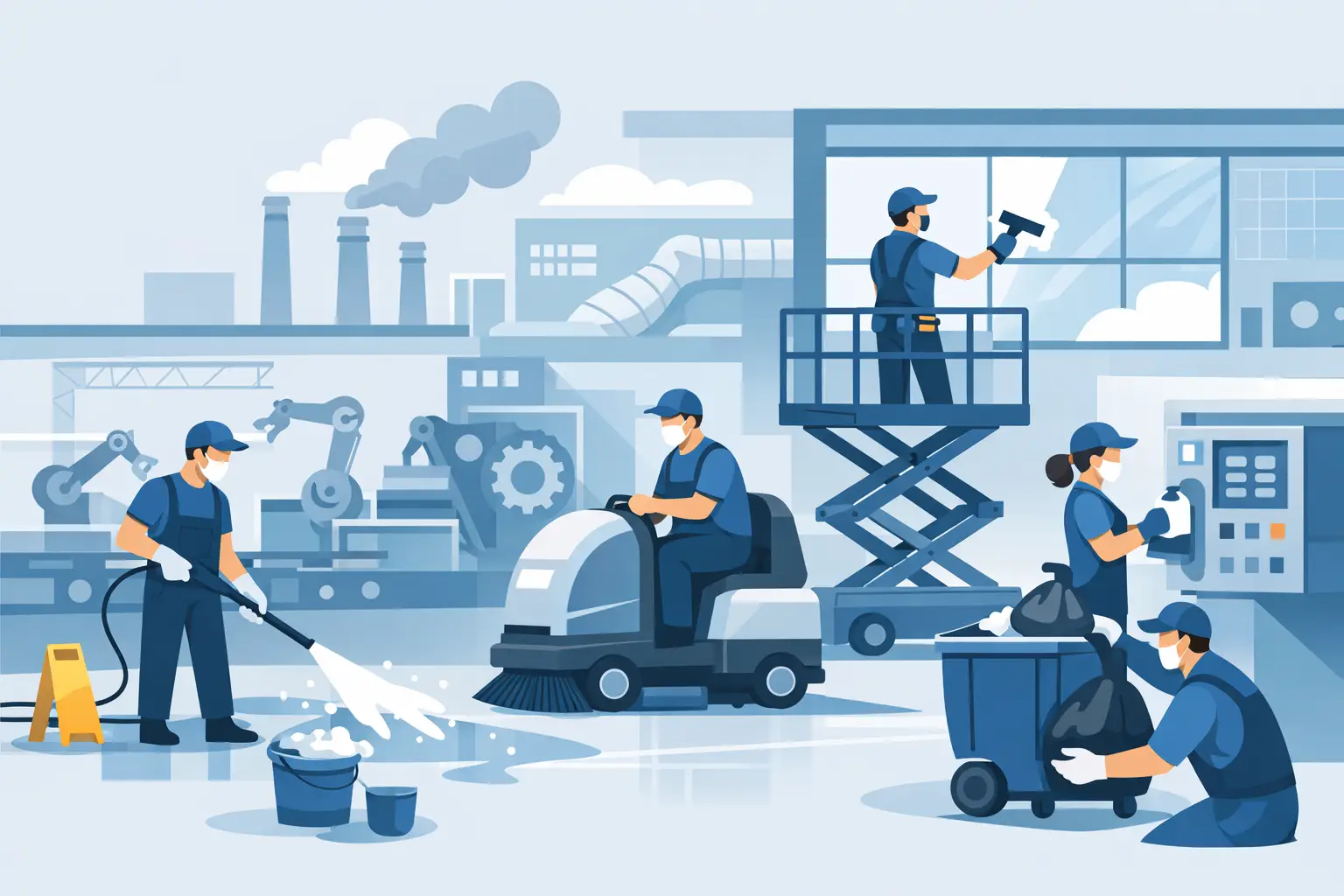
In practice, most factories need a mix of routine cleaning and periodic deep cleaning. Routine work often includes floor cleaning, washroom hygiene, canteen areas, touchpoint sanitising, waste removal and general upkeep of circulation routes. Periodic work may involve high-level dust removal, internal window cleaning, machine-area cleaning around non-sensitive equipment, deep floor scrubbing and more detailed attention to neglected corners where dirt accumulates over time.
This is where a one-size-fits-all package tends to fall short. A busy warehouse attached to a production site may mainly need dust, debris and traffic-mark removal, while a manufacturing area may need tighter controls around residue, contamination risk and housekeeping standards. The cleaning scope has to match the environment, not the label on the building.
Why factories need a different cleaning approach
Factory cleaning is usually more operationally sensitive than office cleaning. The site may run early starts, late finishes or 24-hour production. Certain zones may only be accessible during shutdown periods. Some areas can be cleaned daily without issue, while others need coordination with engineering, supervisors or health and safety leads.
The challenge is not just access. It is timing. Clean too early and the area is in use again before the shift changes. Clean at the wrong point in production and you create disruption. Leave it too long and standards slip. A dependable contractor understands that cleaning has to fit around the way the building works.
There is also the question of workforce movement. In factories, dirt travels. Dust from production can move into corridors and office areas. Mud and water can come in through loading bays. Washrooms and welfare spaces can become untidy quickly across multiple shifts. A cleaning plan needs to consider these patterns rather than treating every room as a separate task.
The link between cleanliness, safety and uptime
A poorly cleaned factory can create more than a poor impression. Slips, trips and blocked walkways are obvious issues, but there are less visible problems as well. Dust build-up can affect air quality and housekeeping standards. Dirty welfare areas can lower staff morale. Waste not removed promptly can interfere with movement and storage. Over time, small issues start to pull on productivity.
That does not mean every site needs intensive daily deep cleaning. In many cases, a practical schedule that focuses on priority areas gives better results than over-cleaning low-risk spaces. It depends on the type of operation, the level of footfall, what the site produces and how quickly dirt builds up during the working day.
For managers, the aim is straightforward. Cleaning should support safe movement, presentable working conditions and consistent operations. If the cleaning arrangement causes delays, confusion or repeated call-backs, it is not doing its job properly.
How factory cleaning services are usually planned
The best starting point is a site visit. That is where a cleaning provider can see the layout, identify pressure points and assess how many staff hours are likely to be needed. Quoting purely from a square-foot figure or a brief phone description often misses too much. Factories vary by ceiling height, floor condition, traffic levels, access restrictions and the number of welfare areas on site.
A proper assessment should look at what needs cleaning, when access is available and whether the work is best split between daily, weekly and less frequent tasks. This matters because cost and quality are both affected by planning. If every job is treated as urgent reactive work, standards can become inconsistent and budgets can creep up.
A planned service is usually more efficient. For example, welfare areas may need daily attention, production walkways may need cleaning after each shift, and high-level or specialist work may be scheduled monthly or quarterly. That kind of structure keeps the site under control without creating unnecessary downtime.
Day cleaning, out-of-hours cleaning and shutdown work
One of the biggest decisions is when the cleaning should happen. For some factories, day cleaning makes sense in non-sensitive areas such as entrances, toilets and canteens. It keeps standards visible and allows quick response to spills or issues during operating hours.
For many industrial sites, however, out-of-hours cleaning is the better fit. Early mornings, evenings and weekends reduce interference with production and allow cleaners to work more thoroughly in traffic-heavy spaces. If a site runs around the clock, the answer may be zoned cleaning during quieter periods rather than a full single-session clean.
Shutdown work is another category altogether. This is often the time for deeper cleaning that would be difficult during normal operations. It may include floor treatment, high-level cleaning or more detailed work around equipment areas where safe access can only be arranged when machinery is not in use. The trade-off is that shutdown windows are usually tight, so staffing and planning need to be right from the start.
What to look for in a cleaning contractor
When comparing factory cleaning services, reliability matters as much as the cleaning itself. A contractor may promise broad coverage, but if they cannot turn up consistently or adapt to your schedule, the arrangement becomes difficult very quickly.
The basics still matter. You need a provider that communicates clearly, turns up when agreed and can supply the right number of cleaners for the size of the job. Beyond that, experience in commercial and industrial environments is valuable because factory sites have different pressures from standard office buildings.
It also helps to work with a company that can respond quickly when requirements change. An inspection visit, seasonal demand, staffing issue or unexpected spill can all affect what is needed that week. Flexible support is not just a selling point in this setting. It is often the difference between staying on top of standards and falling behind.
For businesses in Peterborough and nearby postcodes such as PE1 to PE7, that local responsiveness can be particularly useful when cover is needed at short notice or outside normal hours. A provider such as Peterborough Business Cleaners is built around that practical model – site visits, tailored staffing levels and cleaning support that fits the operation rather than forcing the operation to fit the cleaner.
Common mistakes when setting up factory cleaning services
One common mistake is under-specifying the job to keep the quote low. That may look sensible at first, but if the cleaning hours are not realistic, the result is rushed work and recurring complaints. The opposite mistake also happens – paying for tasks too frequently in areas that do not need that level of attention.
Another issue is poor separation between routine and specialist work. Daily cleaning teams can handle a lot, but some jobs are better planned as periodic deep cleans. Treating everything as part of one general service can lead to confusion over what is included.
Communication is another weak point on many sites. If supervisors, facilities teams and cleaning staff are not working from the same brief, standards become inconsistent. Clear expectations around access, priorities and reporting make a visible difference.
A cleaner factory is easier to run
Factory cleaning works best when it is treated as part of operations, not as an afterthought once the shift ends. Clean floors, usable welfare areas, controlled dust and orderly circulation routes all support a site that runs with fewer avoidable problems. The exact schedule will vary from one factory to another, but the principle is the same. Cleaning should make the building easier to manage, not harder.
If your current setup is reactive, patchy or tied too closely to standard office-style routines, it may be worth reassessing what the site actually needs. A practical cleaning plan, built around how your factory operates, usually saves more trouble than it creates.
Leave a Reply