
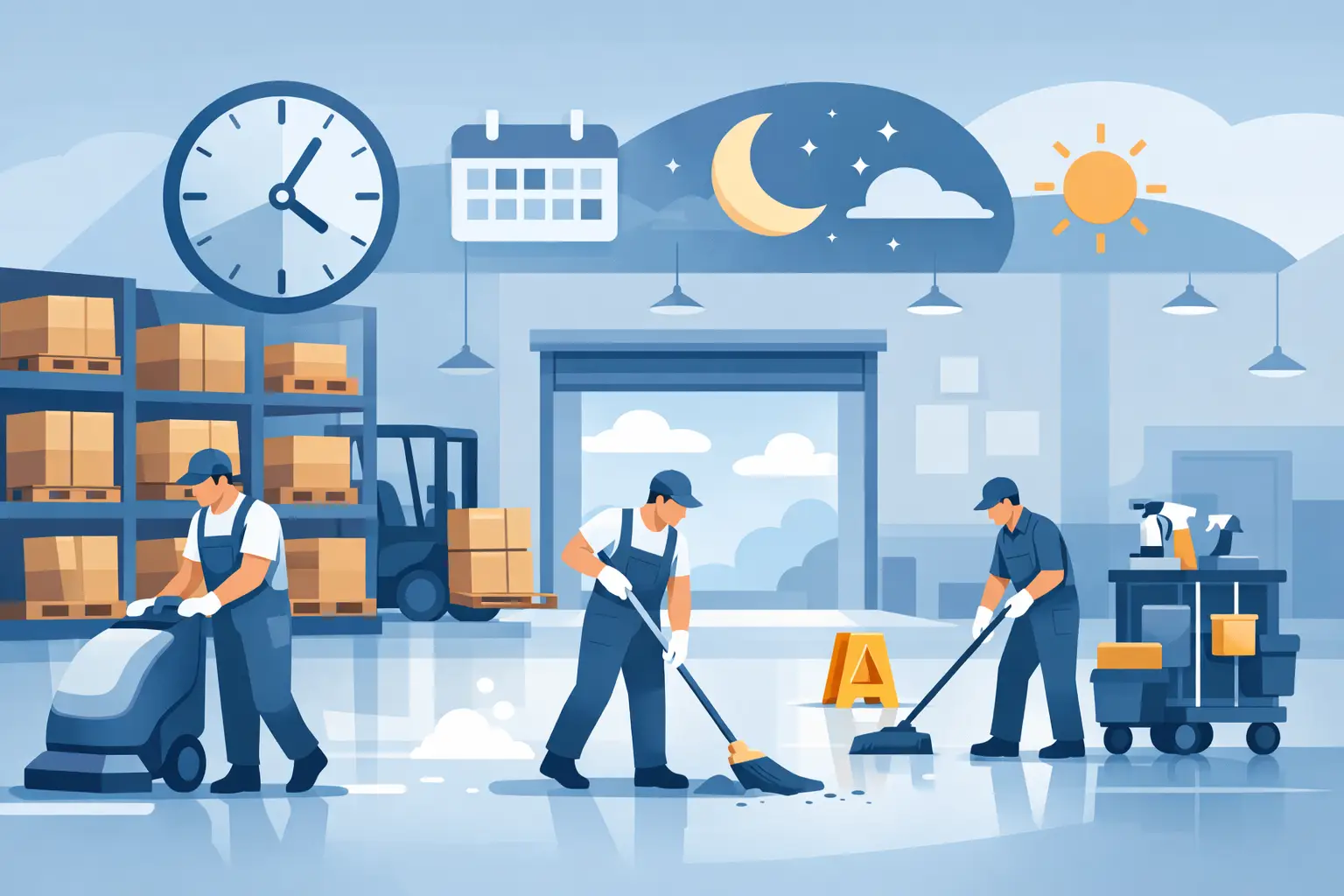
A warehouse can look workable long after cleaning standards have slipped. Dust builds on racking, debris gathers in picking aisles, spillages leave residue on floors, and loading areas bring in dirt every day. That is why asking when should warehouses be cleaned is really about risk, workflow and standards, not appearance alone.
For most sites, the right answer is not a single date on the calendar. Warehouses usually need a mix of daily housekeeping, scheduled routine cleaning and periodic deep cleaning based on stock type, vehicle traffic, footfall, safety requirements and audit expectations. A quiet storage unit will not need the same cleaning pattern as a busy fulfilment site, food-adjacent warehouse or factory-linked space.
When should warehouses be cleaned in practice?
Warehouses should be cleaned as often as operations demand, but before dirt starts affecting safety, stock condition or efficiency. In practical terms, that means some tasks need doing every day, some every week, and some only monthly or quarterly.
Daily attention is usually needed for floors in active aisles, entrances, welfare areas, washrooms and any point where dirt is constantly brought in. If forklifts, pallet trucks and staff are moving through the building all day, dust and debris will not stay contained. Leaving it too long increases slip hazards, spreads contamination and makes later cleaning more disruptive.
Weekly or fortnightly cleaning often suits lower-traffic areas, perimeter edges, skirting, low-level ledges, doors and staff touchpoints. Then there are deeper tasks such as high-level dust removal, racking cleans, deep floor scrubbing and loading bay cleaning, which may sit better on a monthly, quarterly or planned shutdown basis.
The key point is simple. If cleaning is only happening when the warehouse looks obviously dirty, it is already overdue.
What affects how often a warehouse needs cleaning?
The biggest factor is activity level. A warehouse handling constant deliveries and despatches will collect dirt much faster than one used mainly for longer-term storage. More vehicle movement means more tyre marks, more grit from outside and more dust being disturbed across the floor.
Stock type matters as well. Warehouses storing packaged consumer goods may mainly struggle with dust and outer packaging waste. Sites dealing with food ingredients, pharmaceuticals, engineering parts, chemicals or fine materials may need tighter controls and more frequent specialist cleaning. In some settings, even a small build-up around shelving, vents or floors can create quality or compliance issues.
The age and condition of the building also make a difference. Older warehouses often have uneven floors, harder-to-clean surfaces and more places for dust to settle. A newer site with good layout, controlled access and well-managed waste streams may stay cleaner for longer, but it still needs planned attention.
Seasonal conditions should not be overlooked. In wetter months, entrances and loading bays pick up mud and water far more quickly. In dry periods, dust can become the bigger issue, particularly in busy picking zones or sites with open doors for long periods.
The cleaning schedule most warehouses actually need
A workable warehouse cleaning plan usually has three layers rather than one fixed frequency.
Daily cleaning
Daily cleaning should focus on areas where dirt affects safety and day-to-day operations. That normally includes entranceways, walkways, picking aisles, washrooms, canteens, locker rooms and obvious spillages. Waste removal should also be part of the daily routine, especially where packaging, shrink wrap, cardboard and pallets create clutter.
This level of cleaning keeps standards stable. It also prevents small issues becoming expensive ones. A floor that is left with dust, residue or loose debris can quickly become a hazard once forklifts and staff traffic increase.
Routine scheduled cleaning
Routine scheduled cleaning usually sits on a weekly or fortnightly basis, depending on the site. This is where attention moves beyond visible dirt and covers the surfaces and zones that are easy to miss during day-to-day operations.
That may include low-level racking, internal glazing, doors, roller shutters, corners, edges, equipment exteriors and built-up grime in loading areas. On many sites, this is the difference between a warehouse that is merely usable and one that is being managed properly.
Deep cleaning
Deep cleaning is less frequent but still necessary. Monthly, quarterly or biannual deep cleans are common, depending on the environment. These cleans often include machine scrubbing of floors, high-level dust removal, more thorough racking cleans and attention to areas only reachable during quieter operating windows.
Deep cleaning is particularly useful before audits, after peak trading periods, following building works, or when a site has fallen behind and needs resetting to a proper standard.
Signs your warehouse needs cleaning sooner
A schedule should guide cleaning, but conditions on site should overrule it when needed. If dirt is affecting operations, waiting for the next booked visit is rarely sensible.
Visible dust on stock, shelves or ledges is one warning sign. So is debris collecting at aisle edges or under racking. If floors feel tacky, greasy or marked, cleaning has likely been delayed too long. The same applies when washrooms and staff areas start falling below standard, as those spaces affect staff perception as much as hygiene.
There are less obvious signs too. More frequent slip reports, increased dust around vents, poor presentation during customer or auditor visits, and longer time spent by staff doing ad hoc tidy-ups all point to a cleaning plan that is not keeping pace with the site.
If warehouse teams are stopping to clear mess that should have been handled through routine cleaning, productivity is already being affected.
Cleaning during operating hours or out of hours?
This depends on how the warehouse runs. For some sites, cleaning during quieter daytime periods is practical enough, especially if work can be zoned around warehouse activity. For busier operations, out-of-hours cleaning is often the better option because it reduces conflict with picking, loading and internal movement.
There is a trade-off. Daytime cleaning can be easier to supervise and may suit tasks like welfare area cleaning or touchpoint sanitising. Out-of-hours work is better for larger floor areas, machine cleaning and jobs that need more access. The right approach is usually a mix of both.
A cleaning contractor should be able to work around shift patterns, delivery windows and operational pressure points. That flexibility matters more than forcing the site into a cleaning plan that looks tidy on paper but causes disruption in practice.
Why warehouse cleaning should not be left to warehouse staff alone
Most warehouse teams can handle basic housekeeping, and they should. Immediate spill response, waste segregation and keeping walkways clear are part of good site discipline. But relying on operational staff for full cleaning usually leads to inconsistent results.
The reason is straightforward. Cleaning gets pushed behind core tasks such as goods-in, despatch, stock counts and order fulfilment. Even well-run teams tend to focus on what is urgent. That leaves detailed or specialist cleaning either rushed or missed altogether.
Professional support brings structure. It also means the right equipment, enough labour for the task, and a schedule that can actually be maintained. For sites with changing demand, seasonal peaks or multiple work areas, that consistency is hard to achieve in-house without pulling staff away from operations.
Building a realistic cleaning schedule
A warehouse cleaning schedule should reflect the building as it is used, not how it looks on a floor plan. Start with the busiest zones, the dirtiest access points and any compliance-sensitive areas. Then assess what must be cleaned daily, what should be scheduled weekly, and what can be handled through planned deep cleans.
It is also worth checking whether your current standard is based on actual site needs or just habit. Some warehouses are under-cleaned because nobody has reviewed the schedule in years. Others are spending money on frequent cleaning in low-risk areas while high-traffic zones need more attention.
A site visit is often the quickest way to get this right. It helps identify staffing needs, cleaning hours and the best times to carry out work without getting in the way of operations. For businesses in Peterborough and surrounding areas, that kind of practical assessment is usually far more useful than guessing from a generic checklist.
So, when should warehouses be cleaned?
Warehouses should be cleaned before dirt affects safety, compliance, stock condition or workflow. For most sites, that means daily housekeeping, routine scheduled cleaning through the week or fortnight, and deeper planned cleans at suitable intervals.
There is no single rule that fits every warehouse. A smaller storage unit may cope well with light but regular attention, while a high-traffic industrial site may need ongoing cleaning support and periodic deep cleans to stay on top of standards. The right schedule is the one that matches your operation, keeps disruption low and stops cleaning becoming a reactive job.
If you are questioning whether your warehouse is being cleaned often enough, that usually means it is time to review the plan properly. A sensible schedule should make the site easier to run, not something you only think about when there is a problem.
Leave a Reply