
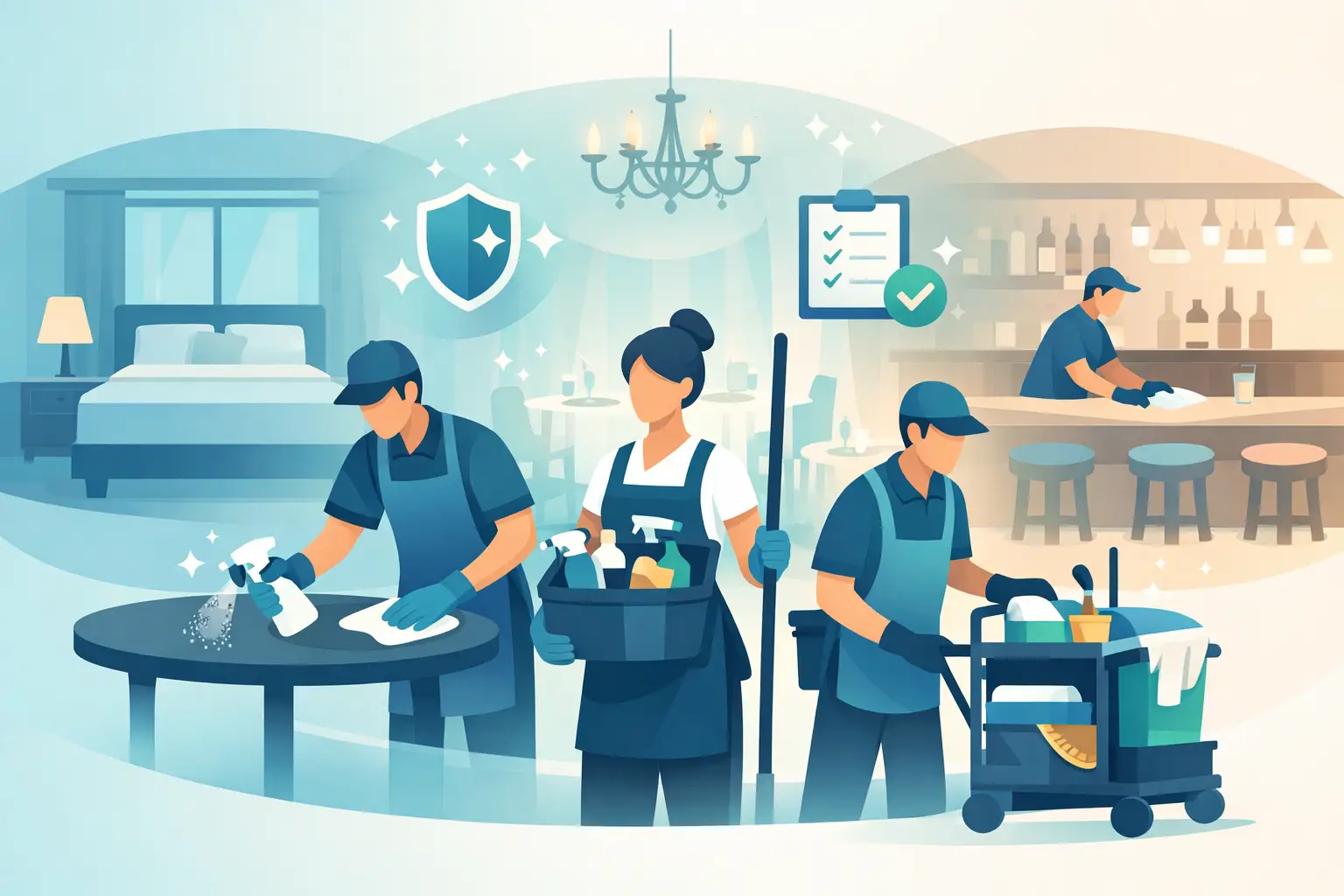
A guest notices more than most managers think. A smear on a mirror, dust on a skirting board, a sticky drinks menu or a washroom that looks tired can undo a lot of good work elsewhere. That is why a proper hospitality cleaning standards guide matters. In hotels, bars, restaurants, B&Bs and event spaces, cleaning is not just about appearance. It affects guest confidence, staff efficiency, reviews and repeat business.
Hospitality sites are different from standard commercial premises because the public sees so much of the operation up close. In an office, a missed detail might go unnoticed until the next day. In hospitality, it is often seen within minutes. Standards need to be visible, repeatable and realistic enough to hold up during busy service periods, not just before opening.
What good hospitality cleaning standards actually look like
A useful hospitality cleaning standards guide should do more than say areas must be clean. That is too vague to manage properly. Good standards define the result expected in each part of the building, how often it should be checked and what level of attention is needed when trade is quiet versus when the site is under pressure.
Front-of-house areas need a finish that guests can see straight away. Floors should be free from debris and marks, tables reset properly, glass and mirrors free from smears, and touchpoints such as door handles, banisters and card machines kept clean throughout service. A reception desk or bar counter can look tidy at first glance while still carrying fingerprints, residue or dust at eye level. That is often where standards slip.
Back-of-house matters just as much, even if customers never enter it. Staff changing areas, storage rooms, corridors and service entrances influence how well the whole site runs. A cluttered or poorly cleaned back-of-house space usually leads to slower service, muddled stock handling and avoidable hygiene risks.
Guest accommodation brings another layer. Bedrooms and bathrooms need consistency rather than rushed appearance-led cleaning. Linen changes, sanitised bathroom fittings, dust-free surfaces, waste removal and proper replenishment all need to happen in the same order each time. If the process changes from cleaner to cleaner, standards become uneven very quickly.
The areas that fail first when sites get busy
Most hospitality venues do not struggle because they have no cleaning routine. They struggle because the routine does not match the pace of the business. During peak periods, the first problem areas are usually washrooms, entrances, flooring around service points and high-touch surfaces.
Washrooms are often the clearest sign of whether standards are being managed actively or left to chance. A washroom can move from acceptable to poor within an hour in a busy venue. That means checks need to be scheduled around traffic, not just around the clock. The same applies to entrance areas in wet weather, where floors can become marked and unsafe much faster than expected.
Food and drink service points also need closer attention than many schedules allow. Spills, sugar residue, condensation marks and bin overflow build up steadily across a shift. If nobody owns those checks during service, the venue can still be working hard while looking poorly managed.
How to set a realistic cleaning standard by area
The best approach is to break the site into zones and set standards based on use, visibility and risk. A lobby, for example, has high visibility and high traffic, so it may need an opening clean, spot checks through the day and a close-down clean. A private function room may need a pre-event set-up clean, in-service attention and a reset afterwards.
Bedrooms need a defined turnaround standard. That should cover beds, bathrooms, floors, surfaces, bins, cups, mirrors, switches and replenishment. It also helps to separate daily stayover cleans from departure cleans, because they are not the same job. Trying to treat them the same usually leads to wasted time in one room and missed detail in another.
Bars and restaurants should separate cleaning tasks into before service, during service and after service. That sounds basic, but it makes staffing decisions much easier. If every task is pushed into the close-down period, teams either finish too late or cut corners. When some tasks are built into the trading day, standards are easier to maintain.
Why checklists help, and where they fall short
Checklists are useful, but only if they reflect the site as it actually operates. A generic list copied across multiple venues rarely works well. A small B&B, a golf club and a late-night bar all need different cleaning rhythms, even if some tasks overlap.
The main value of a checklist is consistency. It gives staff and contractors a clear standard to work to and gives managers something concrete to inspect against. It also helps when shifts change hands, which is often where missed tasks begin.
The weakness is that a checklist can become a tick-box exercise if nobody inspects the finished result. A signed sheet does not prove the standard was met. For hospitality, visual checks still matter. If a floor looks dull, a mirror is streaked or a washroom smells stale, the paperwork is not the issue. The standard has not been achieved.
Staffing levels matter more than most schedules admit
One of the biggest reasons standards fall is simple under-resourcing. If the building needs four hours of cleaning attention across a service period and only two are allocated, the site will either look neglected or the team will rush and miss details. Neither outcome is good for guests or staff.
That is why site assessment matters. Cleaning needs should be based on footfall, layout, trading hours, number of rooms or covers, washroom demand and event turnover, not guesswork. A venue that hosts weddings at weekends and corporate use midweek will need a different pattern from one with steady daily trade.
This is also where an outsourced cleaning partner can be useful. Flexible support makes a difference when occupancy changes, events overrun or weekend pressure is higher than expected. For hospitality operators in Peterborough, that kind of flexibility often matters more than a standard fixed package that looks fine on paper but fails during live service.
Your hospitality cleaning standards guide should include response times
Not every cleaning issue can wait until the next scheduled round. Spills, washroom problems, broken consumable stations and sudden mess in public areas need a quick response. So a practical hospitality cleaning standards guide should set response expectations, not just routine frequencies.
For example, if a public spill occurs, who deals with it and how quickly? If a washroom runs low on supplies during a busy event, who checks it and who replenishes it? If a guest room is released early for an unexpected arrival, what is the process for turning it around properly without cutting corners?
These are operational questions, but they shape cleaning standards as much as any specification document. A venue that responds quickly can recover from disruption without guests noticing. A venue that does not usually ends up with complaints that feel out of proportion to the original issue.
Auditing standards without creating extra admin
Managers need a simple way to check standards without spending half the day on forms. The best audits are short, area-based and tied to visible outcomes. Walk the key zones, inspect the details guests notice first and log repeat issues. If the same points keep failing, the schedule or staffing model probably needs adjusting.
It also helps to audit at different times of day. A site that looks excellent at 8 am may be under real strain by 3 pm. Hospitality standards should be judged across the operating day, not only at opening time.
Photographic references can help where multiple cleaners or shifts are involved. They show what an acceptable finish looks like in a specific room or area. That removes some of the grey area that causes inconsistency.
Common mistakes that quietly damage standards
A lot of standards slip through small habits rather than major failures. Using the wrong cloths across areas, skipping edges and corners to save time, allowing bins to reach overflow, leaving damp floors without proper follow-up and failing to restock consumables before peak periods are all common issues.
Another mistake is assuming staff will raise cleaning problems automatically. They often do not, especially when they are busy with guests. If reporting is informal and unclear, problems sit longer than they should. Clear ownership helps. Everyone does not need to do everything, but everyone should know who to alert.
There is also a trade-off between speed and finish. In fast-turnaround hospitality environments, cleaning has to be efficient. But efficiency is not the same as rushing. The answer is usually better planning, clearer zoning and the right number of people on the job.
Good standards are not about making a venue look perfect for one inspection. They are about keeping the place presentable, hygienic and ready for guests all day, every day. When the standard is practical, properly staffed and checked against real conditions, it holds. That is what guests remember, even if they never say it out loud.
Leave a Reply