
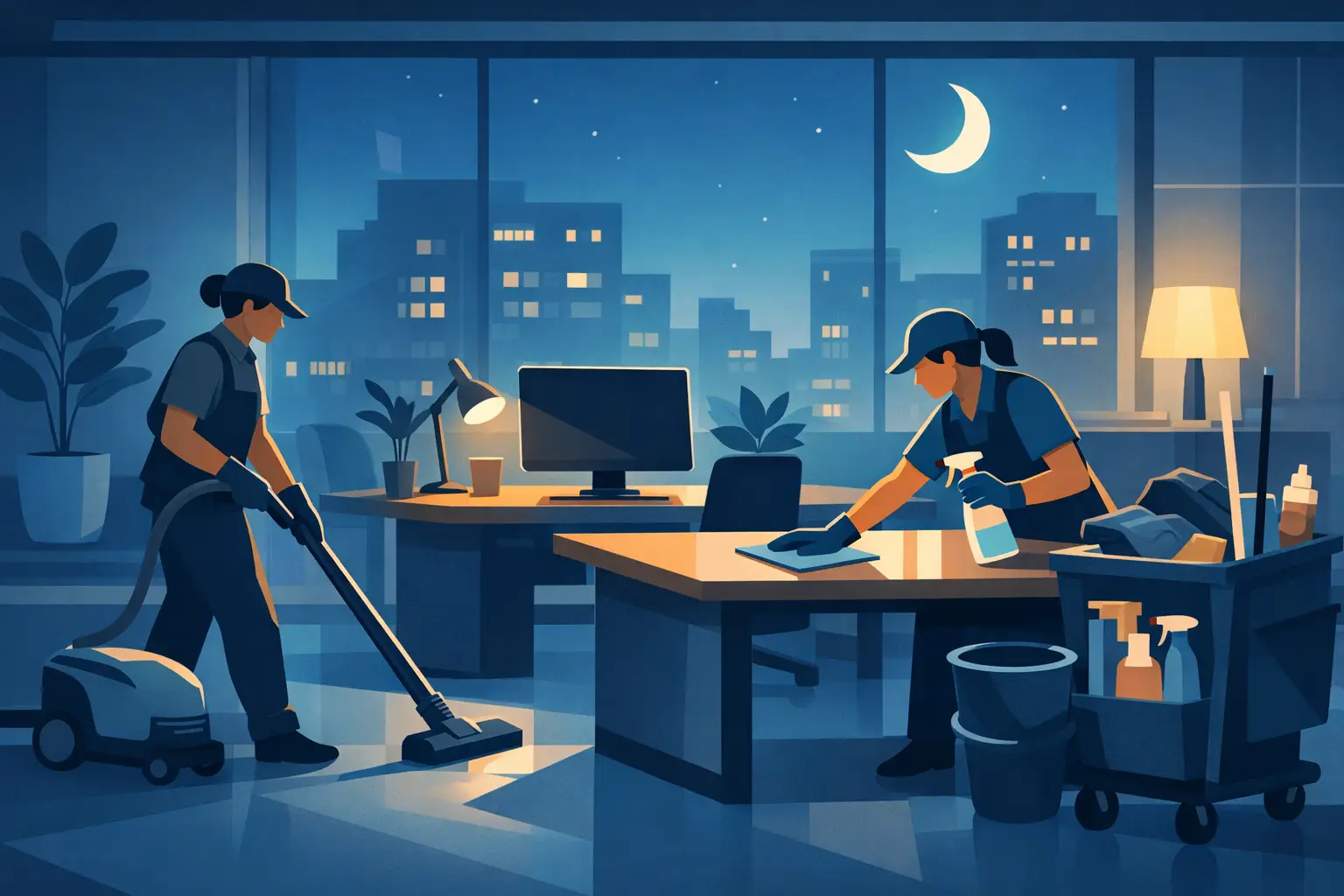
The easiest time to clean an office properly is often when nobody is there. Phones are quiet, meeting rooms are empty, desks are accessible and there is no need to work around staff trying to get through the day. That is why after hours office cleaning is a practical choice for many businesses, especially where daytime cleaning would interrupt normal operations.
For office managers, facilities teams and business owners, the point is not simply to have a cleaner workplace. It is to keep standards high without creating friction for employees, visitors or clients. If your office is busy from opening time to close, cleaning outside working hours can solve problems that daytime attendance often creates.
Why after hours office cleaning suits busy workplaces
In most offices, cleaning tasks compete with the working day. Vacuuming around chairs, sanitising kitchens during lunch breaks and emptying bins in occupied meeting rooms can all be done, but it is rarely ideal. Staff notice the disruption, and cleaners are forced to work around people rather than around the space itself.
After hours office cleaning removes that issue. Cleaners can move methodically through the building when rooms are free and surfaces are clear. That usually means a more consistent result, particularly in shared areas such as receptions, washrooms, kitchens and open-plan offices.
There is also a professional presentation issue. If clients arrive first thing in the morning, you want the site to look clean before the day starts, not halfway through it. An office that is cleaned overnight or in the evening is ready for the next shift from the moment staff walk in.
What gets done during an after hours clean
The exact scope depends on the size of the office, the number of staff, the layout and how the space is used. A small admin office will not need the same level of attention as a multi-floor site with frequent visitors and high washroom use.
Most after hours office cleaning schedules cover the basics that keep a workplace presentable and hygienic. That usually includes vacuuming carpets, mopping hard floors, wiping desks and touchpoints, cleaning kitchen areas, sanitising washrooms and removing rubbish. In some offices, the priority is appearance. In others, it is hygiene and touchpoint cleaning, particularly where teams hot-desk or share equipment.
Window cleaning, deeper carpet work, internal glass, appliance cleaning and periodic deep cleans may also be added, but they are not always part of the daily or weekly routine. The right plan depends on what your site actually needs rather than what sounds comprehensive on paper.
The operational benefits are straightforward
The main benefit is reduced disruption, but there are others that matter just as much over time.
Cleaning teams working out of hours can usually complete tasks faster because they are not waiting for rooms to become free or trying not to interrupt calls and meetings. That can improve efficiency and make cleaning hours easier to plan. It may also reduce the need for repeat visits to areas that were inaccessible during the day.
Security and access can be managed more clearly too. Rather than having cleaners arriving at busy times, movement through the building is limited to agreed hours and agreed areas. For many businesses, that feels easier to control.
There is also a staff experience factor. People generally prefer starting the day in a clean office rather than working around cleaning activity. It sounds minor, but clean kitchens, stocked washrooms and tidy floors all affect how a workplace feels.
When after hours office cleaning is the better option
It is not automatically right for every site. Some businesses prefer early morning cleaning, and some can accommodate limited daytime attendance without any real issue. The best choice depends on how your office runs.
After hours cleaning tends to work well when your team is on site all day, client visits are frequent, meeting rooms are heavily booked or noise needs to be kept to a minimum during working hours. It is also a sensible option where cleaners need full access to desks, shared equipment, kitchens or washrooms without constant footfall.
If your office operates extended hours or has evening staff, timing becomes more specific. In those cases, a cleaning contractor may need to work later into the night or split tasks between quieter periods. That is why flexibility matters. A fixed template does not suit every building.
Security, access and trust matter
Any out-of-hours service depends on reliability. If cleaners are attending when your team has left, you need confidence that access arrangements, alarm procedures and closing routines will be handled properly.
A professional cleaning contractor should be clear about who attends, when they attend and how the site is secured afterwards. That includes practical details such as keyholding, alarm setting, attendance logs and reporting any issues noticed during the clean. These are not extras. They are part of running a dependable service.
It is also worth thinking about communication. If an area cannot be cleaned, supplies are low or a maintenance issue is spotted, you want to know quickly. Good after hours cleaning is not invisible in the sense of poor communication. It should be unobtrusive in operation, but clear in reporting.
Choosing the right schedule for your office
Frequency is often where businesses either overbuy or under-specify. A small office with low footfall may only need a few visits a week. A larger office with heavy kitchen and washroom use may need daily cleaning, with periodic deeper work built in.
The practical starting point is to assess how many people use the site, how often clients visit and which areas degrade fastest. In many offices, washrooms and kitchens drive cleaning frequency more than desks do. In others, entrance areas and meeting rooms take the strain.
This is where a site visit can be useful. Looking at the premises in person gives a clearer idea of staffing levels, cleaning hours and any access constraints. It also helps avoid vague quotes that do not reflect the real workload.
What to look for in an after hours office cleaning provider
Reliability matters more than sales language. You need a provider who can turn up consistently, work to an agreed specification and adjust when your operational needs change.
That means asking sensible questions. Can they cover evenings, nights or early mornings as required? Can they scale staffing if your office expands or if you need additional support after events, refurbishments or periods of heavy use? Do they work across different commercial environments, or only basic office settings?
A local provider with flexible availability can be especially useful if your requirements are likely to change. In Peterborough and the surrounding PE areas, that often matters because many businesses need a contractor who can respond quickly rather than fit them into a rigid national schedule.
Price matters, but so does coverage. A lower quote is not much help if standards slip, communication is poor or missed cleans become a recurring issue. The better question is whether the service level matches the way your business actually operates.
Trade-offs to be aware of
After hours office cleaning is practical, but there are still trade-offs. Access arrangements need to be properly organised, and someone on your side usually needs to manage keys, codes or alarm procedures at the start of the contract.
There may also be less direct day-to-day visibility than with daytime cleaning. If the cleaning team works after everyone has gone home, quality checks need to be built into the service rather than left to chance. That is usually manageable, but it does require a clear scope and regular communication.
For some offices, a blended model works best. Core cleaning may be done after hours, while occasional daytime attendance covers consumables, washroom checks or reactive issues. It depends on the building, the occupancy pattern and how polished the site needs to be throughout the day.
A practical choice for businesses that need less disruption
After hours office cleaning works because it respects the main job of an office, which is to support the people working in it. Cleaning still gets done to a professional standard, but it happens at a time that does not get in the way.
For businesses that need dependable support, flexible scheduling and a cleaner site ready for the next working day, it is often the most sensible arrangement. If your office cleaning currently feels like something staff have to work around, that is usually the sign the timing needs to change.