
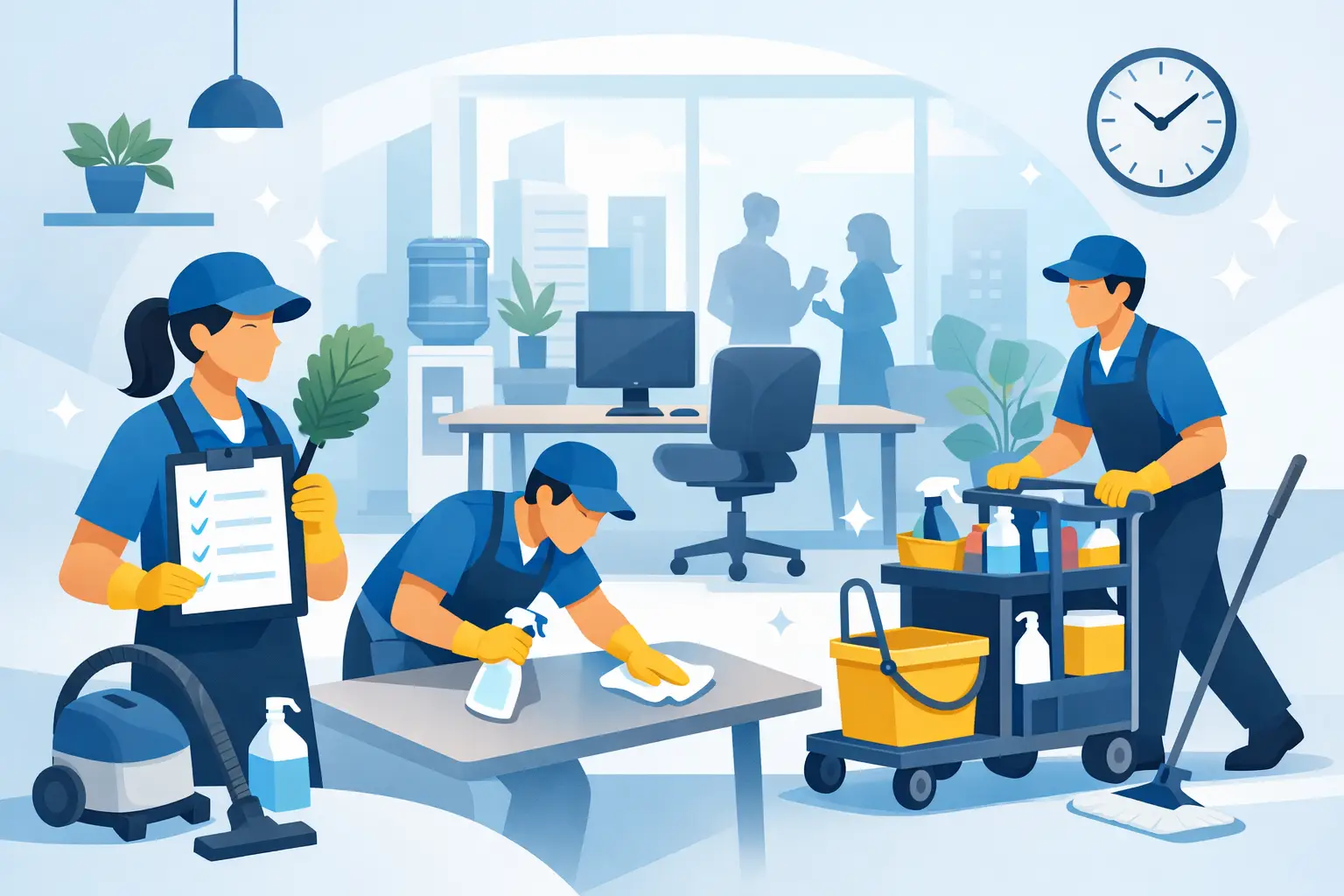
If your office starts Monday looking tidy and by Thursday the kitchen, toilets and meeting rooms are already letting the place down, the issue is rarely effort. It is usually a lack of a clear office cleaning checklist. For business owners and facilities teams, that checklist is what keeps standards consistent, avoids missed jobs and makes it easier to spot when extra support is needed.
A clean office is not just about appearance. It affects staff wellbeing, first impressions, hygiene standards and how smoothly the working day runs. In shared workplaces especially, small cleaning tasks build up quickly. Cups get left in sinks, bins overflow, washrooms run short of supplies and fingerprints spread across doors and glass. Without a clear routine, those jobs become reactive instead of controlled.
What an office cleaning checklist should cover
A useful office cleaning checklist needs to match the way the site actually operates. A small office with six staff will not need the same schedule as a multi-floor building with a reception desk, breakout space, meeting rooms and high visitor traffic. The right checklist should reflect footfall, working hours, the number of washrooms, kitchen use and any client-facing areas.
It also needs to divide jobs by frequency. Some tasks need doing every day because they affect hygiene or presentation immediately. Others can be handled weekly or monthly without causing a drop in standards. Splitting the work this way helps managers plan properly and avoids paying for unnecessary time where a lighter schedule would do.
Daily office cleaning checklist
Daily cleaning is the foundation. These are the jobs that keep the workplace usable, presentable and hygienic from one working day to the next.
Reception areas, entrances and shared spaces should be checked first. Floors need vacuuming or mopping depending on the surface, entrance glass should be kept clear of marks, and touchpoints such as door handles, push plates and reception counters should be wiped and sanitised. These are the areas visitors see first, so any drop in standards is noticed straight away.
Desks and workstations can be a grey area because many businesses prefer staff to keep personal items in order while cleaners handle surrounding surfaces. That is often the sensible approach. A daily routine should include emptying bins, vacuuming around desks, wiping reachable hard surfaces and spot cleaning marks, while sensitive equipment and paperwork are left undisturbed unless agreed otherwise.
Kitchens and tea points need daily attention in almost every office. Sinks, taps, worktops, cupboard fronts, appliance exteriors and table surfaces should all be cleaned. Floors need mopping, bins should be emptied and relined, and supplies such as hand soap, washing-up liquid, paper towels and bin liners should be checked. If the office kitchen is heavily used, one visit per day may not be enough.
Washrooms are non-negotiable. Toilets, urinals, basins, taps, mirrors and cubicle touchpoints should be cleaned and sanitised daily at a minimum. Floors should be mopped, sanitary bins managed where relevant, and toilet roll, hand soap and hand towels replenished. If washrooms serve staff and visitors throughout the day, they may need more frequent checks to avoid complaints and hygiene issues.
Meeting rooms often get overlooked because they are not occupied all the time, but they matter. Tables should be wiped, bins emptied, chairs straightened and visible marks removed from glass or screens. If clients use these rooms, presentation matters just as much as hygiene.
Weekly cleaning tasks that prevent build-up
A good office cleaning checklist does not stop at the obvious daily jobs. Weekly tasks deal with the build-up that staff notice gradually but may not report until it becomes a problem.
Hard floors benefit from a more thorough clean each week, particularly in circulation areas. Carpeted zones may need edging, deeper vacuuming and attention to corners, skirting boards and under furniture where dust collects. Interior glass partitions, lower wall marks and door frames should also be cleaned on a weekly basis in most offices.
Kitchen areas usually need a more detailed weekly clean than the daily wipe-down allows. This can include descaling sinks, cleaning inside microwaves, wiping splashbacks properly, removing marks from tiles and sanitising frequently touched surfaces more thoroughly. Fridge cleaning is often best managed with a clear policy, as it depends on whether staff are expected to label and remove old food.
Washrooms also benefit from a weekly deeper clean. That may include descaling fittings, cleaning tiled walls, polishing dispensers and treating grout or floor edges where dirt builds up. If daily standards are slipping despite regular attendance, it usually means the weekly detail is being missed.
Workstations, telephones and shared equipment may also need scheduled sanitising, particularly in busy offices with hot-desking. The trade-off is practical: the more detailed the cleaning around desks, the more important it is to agree access rules with staff so cleaners can do the job without disrupting documents or equipment.
Monthly and periodic tasks
Some cleaning tasks do not need doing every day or every week, but they still need a place on the schedule. If they are not listed, they tend to be forgotten.
A monthly review should usually include high dusting on vents, ledges, tops of cupboards and light fittings, along with deeper treatment of carpets or hard floors if wear is becoming visible. Upholstery can be vacuumed, internal windows cleaned more thoroughly and neglected corners checked for dust, cobwebs or staining.
Depending on the office layout, periodic tasks may also include deep cleaning washrooms, machine scrubbing floors, carpet spot treatment, internal partition cleaning and detailed kitchen appliance cleaning. These jobs are not always needed on a fixed monthly cycle. It depends on traffic, usage and the standard the business needs to maintain.
That is why the best cleaning plans are reviewed, not set once and ignored. If a boardroom is only used twice a month, it may not need the same attention as an open-plan office with constant footfall. Equally, a small kitchen used by thirty people may need more than a standard daily visit.
How to build an office cleaning checklist that works
Start with the areas that create the most risk if standards slip. In most offices, that means washrooms, kitchens, entrances and bins. Then look at the spaces that affect presentation, such as reception, meeting rooms and glass. Finally, add the periodic tasks that protect the building over time.
It helps to walk the site at the same time of day when issues are most visible. A morning inspection may show overnight cleaning standards, while a late afternoon check reveals how well the office copes during use. That difference matters. Some sites look clean at 7am but struggle by lunchtime, which suggests the schedule is right on paper but wrong for actual footfall.
Responsibility also needs to be clear. If some jobs sit with staff and others with a cleaning contractor, make that explicit. Confusion is where standards drop. A kitchen might be cleaned nightly, but if nobody clears food waste during the day, it will still look poorly managed.
For multi-use sites, flexibility matters as much as frequency. Businesses with extended opening hours, evening meetings or weekend use often need cleaning outside normal office times. That is where an outsourced service becomes practical. A provider such as Peterborough Business Cleaners can assess the site, the number of cleaners required and the best cleaning hours so routine tasks are covered without disrupting operations.
Common mistakes with office cleaning schedules
The most common mistake is using a generic checklist copied from another building. It may look thorough, but if it does not reflect your office layout and traffic, it will miss the mark. A second issue is treating all areas equally when they clearly are not. Toilets and kitchens need tighter control than a locked archive room.
Another problem is failing to review consumables alongside cleaning. A washroom can be freshly cleaned and still generate complaints if there is no soap or toilet roll. In practice, replenishment and cleaning need to sit together.
There is also the question of timing. If cleaners arrive too early, the office may look tired again before visitors arrive. If they attend only during working hours, staff may feel disrupted. The right answer depends on the site, which is why fixed packages do not always work well for commercial premises.
When to adjust your checklist
If complaints are increasing, smells linger, bins fill before the next visit or washrooms run out of supplies regularly, your current checklist is no longer enough. The same applies if you have taken on more staff, changed office layout or increased client visits. Cleaning schedules should move with the business.
A helpful checklist is not the one with the most tasks on it. It is the one that matches the building, the people using it and the standard you need to maintain every week. Get that right, and cleaning becomes one less operational problem to think about.
Leave a Reply