
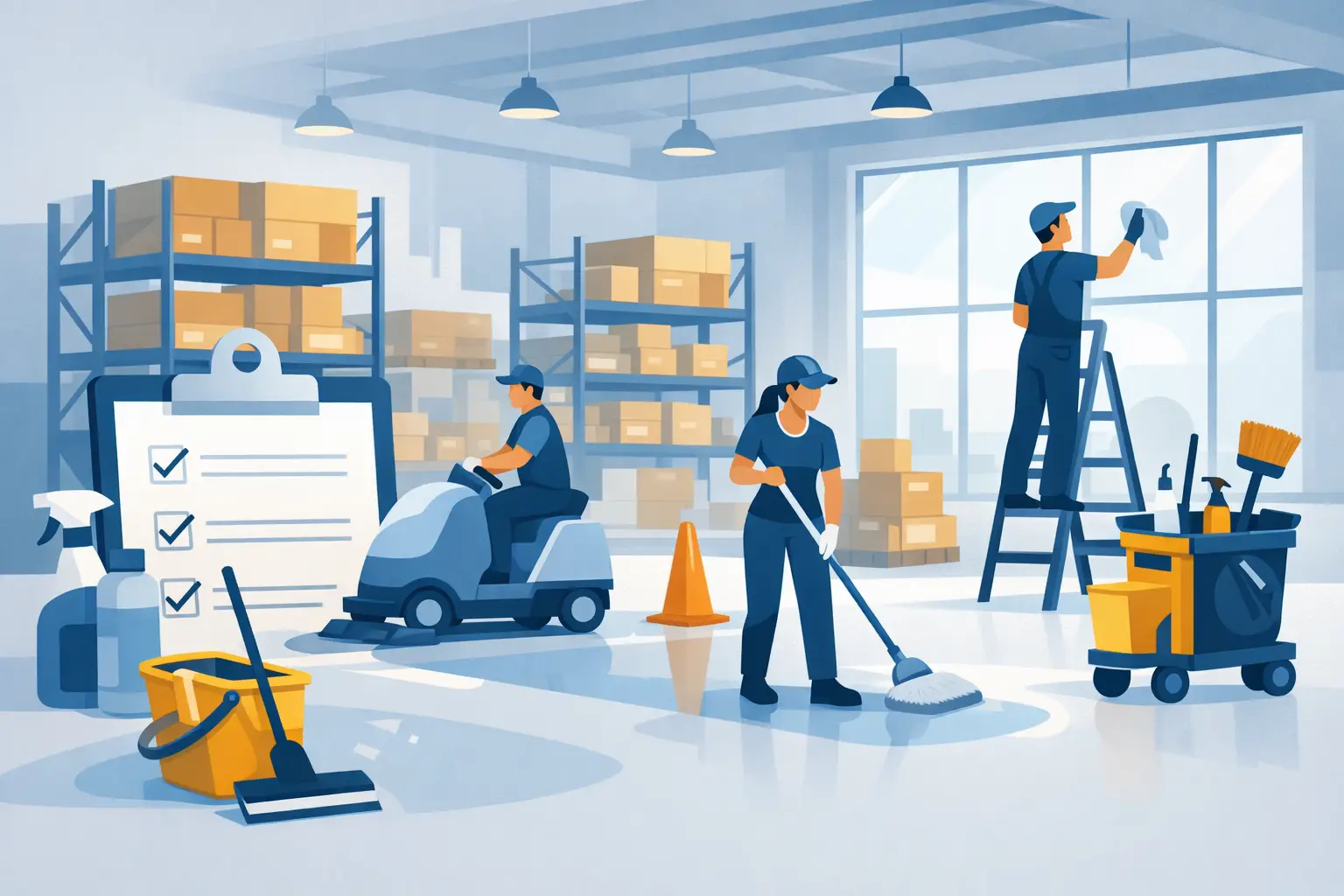
A missed spill in a warehouse does not stay a small problem for long. It turns into tyre marks, damaged stock, slip risks and wasted time. That is why a clear warehouse cleaning plan example is useful – not as paperwork for its own sake, but as a working document your team can actually follow on shift.
Warehouses are harder to clean than many other commercial spaces because dirt moves with the operation. Dust settles on racking, debris collects around loading bays, packaging waste builds up fast, and traffic routes never stay quiet for long. A plan needs to match how the building is used, who is responsible, and when cleaning can happen without disrupting picking, storage or dispatch.
What a warehouse cleaning plan example should cover
A good plan is specific. It sets out what needs cleaning, how often it needs doing, who does it, and how standards are checked. If any of those parts are vague, tasks get missed or pushed back.
For most sites, the plan should cover floor areas, pedestrian walkways, loading bays, racking, staff welfare spaces, washrooms, touchpoints, waste handling points and any production or packing zones attached to the warehouse. It should also reflect the risks on site. A food-related warehouse, for example, will need tighter controls than a general storage unit. A site with constant forklift movement will usually need more frequent floor cleaning than a lower-traffic building.
The other point worth making is that not every cleaning task belongs on a daily schedule. If you try to put everything into one shift, the plan becomes unrealistic. The better approach is to separate work into daily, weekly and monthly tasks, then add periodic deep cleaning where needed.
Warehouse cleaning plan example by task and frequency
Below is a practical warehouse cleaning plan example that can be adapted for most commercial storage environments.
Daily cleaning tasks
Daily cleaning should focus on safety, hygiene and visible standards. This usually includes sweeping or machine cleaning of main traffic routes, spot cleaning spills as they happen, clearing packaging waste, emptying bins, cleaning canteen and washroom areas, and wiping high-contact points such as door handles, push plates, shared equipment controls and clocking-in terminals.
Loading bay entrances often need daily attention as well, especially in poor weather. Mud, standing water and loose debris can be brought in quickly by foot traffic and vehicle movement. If your operation starts early or runs overnight, it may be better to clean these areas in stages rather than waiting until the end of the day.
A simple daily record should show the area cleaned, time completed, staff initials and any issues found. That last part matters. Cleaning teams are often the first to notice damaged flooring, leaking stock, pest evidence or blocked access routes.
Weekly cleaning tasks
Weekly tasks deal with the build-up that does not create an immediate hazard but will become a larger problem if left. This often includes deeper floor scrubbing in selected zones, cleaning lower racking levels, removing dust from skirting, ledges and corners, wiping warehouse doors and internal glass, disinfecting shared workstations and cleaning around pallet wrapping or packing stations.
This is also the right point to review waste storage areas. If bins are being overfilled or cardboard is piling up around balers and compactors, the issue is not just appearance. It can affect fire safety, access and efficiency.
Where warehouses include offices, goods-in desks or driver waiting areas, these should sit inside the same plan rather than being treated as separate spaces. Operationally, they are part of the same site and standards need to stay consistent.
Monthly and periodic tasks
Monthly tasks are usually the jobs that need more time, equipment or access planning. These can include high-level dust removal, deep cleaning behind fixed equipment, internal cleaning of roller shutters, cleaning vents and extraction points, and more detailed treatment of stained floor sections.
Some sites also need quarterly work depending on stock type and layout. High-bay racking, hard-to-reach pipework, mezzanine edges and external entrance areas can all sit on a longer cycle. It depends on dust levels, traffic, compliance requirements and how visible the area is to staff, auditors or visiting clients.
A simple warehouse cleaning schedule example
A plan works best when it is easy to read at a glance. Long policy documents tend to be ignored on busy sites. In practice, a one-page schedule for routine tasks and a separate sheet for periodic cleaning is often enough.
You might structure it like this in plain terms: goods-in floor swept and checked each morning, loading bay debris removed twice daily, washrooms cleaned and restocked once per shift, bins emptied at end of day, canteen sanitised daily, lower racking dusted weekly, floor machine scrub in dispatch every Friday, and high-level dusting booked monthly.
The standard should be written beside the task wherever possible. For example, saying clean floor is less useful than saying floor free from loose debris, spills and tyre-spread contamination. Clear wording reduces disputes about whether a job is finished.
Who should own the plan
The cleaning plan needs one owner, even if several people carry out the work. On most sites this will be the facilities manager, warehouse manager or operations lead. Their role is not to do every task, but to make sure the schedule is realistic, staffing is adequate, supplies are in place and standards are checked.
If cleaning is handled in-house, responsibility should be assigned by area and shift. If it is outsourced, the contractor should still work to named contacts, agreed frequencies and sign-off procedures. This is especially useful on larger sites where access windows are tight and cleaning needs to happen around dispatch times.
A common mistake is assuming everyone will deal with issues as they see them. In reality, shared responsibility often becomes no responsibility. Named ownership is what keeps the plan live.
Adapting the plan to your warehouse
No single warehouse cleaning plan example fits every operation. A small unit with light storage and low footfall may only need limited daily cleaning plus a scheduled weekly visit. A busy distribution site with multiple loading doors, MHE traffic and shift work will need far more frequent coverage.
You should also consider stock sensitivity. Warehouses storing paper goods, fabrics, food packaging or technical products may need tighter dust control. Sites with customer visits or audit requirements may prioritise presentation more heavily than a back-of-house storage unit.
Timing matters as much as frequency. Cleaning during peak movement can create its own risk, especially if machine cleaning crosses forklift routes. Often the safest and most efficient option is early morning, late evening or split cleaning around quieter periods. That is one reason many businesses prefer flexible support rather than a fixed daytime slot.
What to check when reviewing standards
A cleaning plan should not sit untouched for six months. If the warehouse layout changes, stock profile shifts, or volumes increase, the plan needs updating. Review it against practical outcomes. Are floors staying safe between cleans? Are bins overflowing before collection? Are washrooms and welfare spaces meeting the standard expected by staff?
It also helps to look at recurring issues. If the same bay is always dirty, the answer may not be more cleaning. It may be a drainage issue, poor waste handling, damaged flooring or a workflow problem. Good cleaning management solves the cause where possible, not just the symptom.
Periodic checks should be documented. That can be as simple as a supervisor walk-round with notes and photos. What matters is consistency and a clear record of what was found and what action followed.
When it makes sense to bring in professional support
Some warehouses can manage routine cleaning internally, particularly smaller sites with stable operations. Others find that cleaning slips because warehouse staff are rightly focused on picking, goods-in and dispatch. When that happens, standards become reactive.
Professional cleaning support is usually worth considering when the site runs long hours, when there are multiple welfare and operational zones to maintain, or when deeper cleaning keeps getting postponed. It can also help where a site needs coverage outside standard working hours to avoid disruption. For businesses in Peterborough and the surrounding area, that often means arranging cleaning around shift patterns rather than trying to force it into the middle of the day.
The right setup is the one that fits the operation. For some warehouses that means a regular scheduled clean. For others it means a mix of routine visits, periodic deep cleaning and fast response when conditions change.
A warehouse cleaning plan example is only useful if it reflects the way your site actually works. Keep it clear, keep it realistic, and make sure the people carrying it out have enough time and accountability to do the job properly. A cleaner warehouse is not just about appearance – it supports safety, efficiency and fewer avoidable problems across the day.
Leave a Reply