If you are comparing cleaning quotes, the first question is usually the right one – what is included in commercial cleaning? The answer depends on the type of premises, how often the site is used, and what standard you need to maintain. A small office, a busy bar and a warehouse will not need the same cleaning schedule, even if the floor area looks similar on paper.
Commercial cleaning normally covers the routine tasks needed to keep a business premises clean, hygienic and presentable. That often includes floors, washrooms, kitchens or tea points, touchpoints, bins and general dusting. In many cases, it also includes restocking consumables if agreed in advance, plus periodic deeper work on top of the regular visit schedule.
What is included in commercial cleaning day to day?
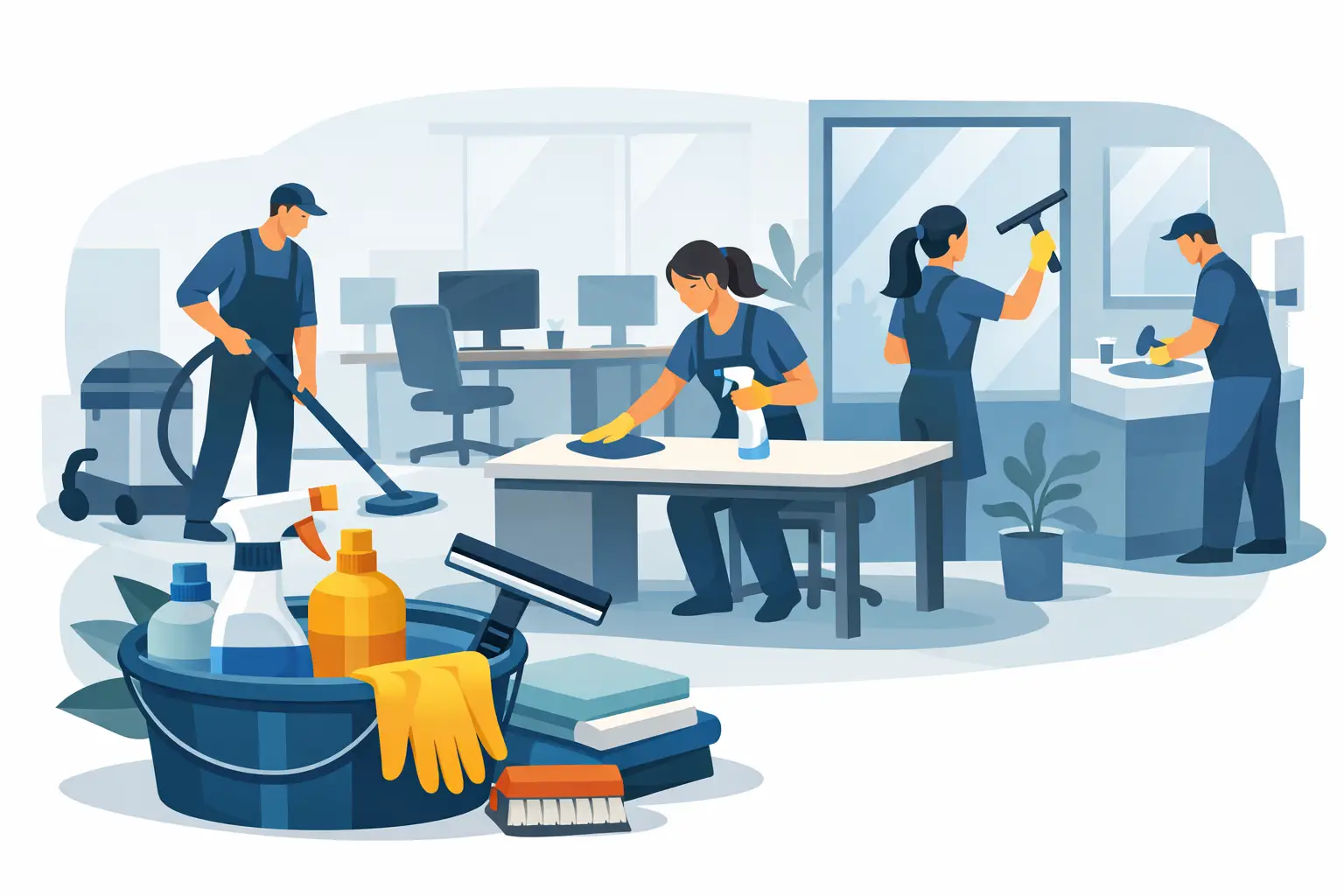
For most businesses, commercial cleaning starts with the basics that affect staff, customers and visitors straight away. Floors are vacuumed, swept or mopped depending on the surface. Hard floors may need machine cleaning in some settings, while carpeted areas may just need regular vacuuming with extra attention to entrances, corridors and meeting spaces.
Work surfaces, desks, counters and accessible ledges are usually dusted and wiped. In shared environments, cleaners will focus on areas that collect regular use, such as reception desks, door handles, bannisters, lift buttons and light switches. These are the places that quickly make a site feel untidy if they are missed.
Bins are typically emptied, liners replaced where needed, and visible waste removed from working areas. In washrooms, the standard expectation is higher. Toilets, urinals, basins, mirrors and cubicles are cleaned and sanitised, and floors are mopped to maintain hygiene and appearance.
Kitchenettes, staff kitchens and tea points are also commonly included. That usually means wiping worktops, cleaning sink areas, removing rubbish and making sure the area stays usable for staff between shifts. If a business has a larger catering setup, the scope may need to be agreed separately because food-service environments often require a more detailed approach.
Core tasks most businesses expect
Although every contract is different, most regular commercial cleaning schedules cover a similar set of routine duties.
General internal cleaning
This usually includes vacuuming carpets, mopping hard floors, wiping skirting, dusting accessible surfaces, cleaning internal glass where practical, and keeping entrances, corridors and shared areas tidy. Reception areas often get extra attention because they shape first impressions.
Washroom cleaning and sanitising
Washrooms are one of the most important parts of any commercial cleaning specification. A proper service should cover toilets, sinks, taps, mirrors, dispensers and floors, along with spot-checking for marks, odours and build-up. In high-traffic sites, washrooms may need more frequent cleaning than the rest of the building.
Kitchen and breakout areas
These spaces need regular wiping and sanitising, especially around sinks, kettles, microwaves and shared appliances. The cleaning requirement depends on how heavily staff use the area. A small office tea point is very different from a hotel breakfast service area or a busy staff canteen.
Waste handling
Emptying bins sounds simple, but it matters. Overflowing bins and poor waste control affect hygiene, smell and presentation. Some sites also need separation of general waste and recycling, which should be built into the cleaning routine if required.
What is included in commercial cleaning for different premises?
This is where many businesses get caught out. A quote may look competitive until you realise it is based on a generic office-style schedule that does not suit your building.
In offices, the focus is usually appearance, hygiene and keeping disruption low. Cleaning often happens before staff arrive, after they leave, or outside peak hours. Attention tends to go on workstations, meeting rooms, kitchens, washrooms and entrance areas.
In hospitality settings such as hotels, B&Bs, bars and event venues, standards are more visible and turnover is often faster. Public areas may need repeated cleaning in the same day. Toilets, floors, touchpoints and front-of-house presentation become critical, especially at weekends or during events.
In schools and education settings, cleaning has to work around safeguarding, term-time activity and heavy daily use. Classrooms, corridors, washrooms and dining spaces all have different needs. Timing matters just as much as the task list.
In warehouses and factories, the requirement is often more practical than cosmetic, but no less important. Dust, debris, welfare areas, staff facilities and traffic routes all need attention. The work may also need to fit around operational hazards, machinery, loading schedules or shift patterns.
Retail premises usually need a strong focus on customer-facing areas, fitting rooms, floors, tills and entrance zones. New-build and handover cleaning is another category again, often involving builders’ dust, debris removal, polishing and detailed finishing work before a site is ready for occupation.
What may be included only if agreed
Not every commercial cleaning contract covers every task as standard. Some work is routine in one building and specialist in another.
Window cleaning is a common example. Internal glass is often part of general cleaning, but external window cleaning may sit outside the regular contract, especially if upper-level access is involved. Carpet cleaning is similar. Routine vacuuming is normally included, but stain treatment or full carpet extraction is often scheduled separately.
Consumable restocking can also vary. Some businesses expect cleaners to refill toilet roll, soap and hand towels from stock kept on site. Others want cleaning only, with site staff managing supplies. Neither approach is wrong, but it should be made clear from the start.
Deep cleaning, high-level cleaning, exterior areas, chewing gum removal, pressure washing, hard floor polishing and specialist sanitisation may also be treated as additional services. That does not mean they are difficult to arrange. It simply means they need to be scoped properly rather than assumed.
Why cleaning specifications matter more than task lists
A short task list does not always tell you much. Two contractors can both say they clean washrooms, kitchens and floors, but the standard, frequency and staffing can be completely different.
What matters is the cleaning specification behind the quote. That should set out which areas are included, how often they are cleaned, what time the work is done, who provides consumables, and whether there are any exclusions. If a site needs early morning cover, weekend attendance or out-of-hours access, that should also be reflected.
This is why site visits are useful. A visual assessment often picks up practical issues that floorplans and email enquiries do not. Entry points, storage space, washroom numbers, floor types and traffic patterns all affect the labour required.
For businesses in Peterborough, especially those with changing operational hours or mixed-use premises, a tailored cleaning plan is usually more reliable than a fixed package.
How often should commercial cleaning be done?
There is no single answer. A quiet office may only need cleaning a few times a week. A bar, school, medical-adjacent setting or busy customer site may need daily or even multiple visits. Frequency should reflect footfall, usage, hygiene risk and the standard expected by staff or customers.
Cleaning too little creates obvious problems – poor presentation, odours, dust build-up and hygiene issues. Cleaning more than necessary can push up costs without adding much value. The right schedule sits somewhere in the middle and can usually be adjusted once the site has been assessed in real use.
What to ask before accepting a quote
If you want to know what is included in commercial cleaning, ask for the practical detail rather than the sales version. Find out which rooms and areas are covered, what the cleaner will do on each visit, whether consumables are included, and which jobs are classed as periodic or extra-charge work.
It also helps to ask how the contractor deals with absence cover, changes in hours and urgent call-outs. Reliability is not just about the first clean. It is about whether the service still works when your building is busy, your staffing changes, or you need support outside standard times.
A good commercial cleaning arrangement should feel clear from the outset. You should know what is being done, when it is being done, and what happens if your needs change.
The most useful way to think about commercial cleaning is not as a generic checklist, but as a working support service for your premises. If the scope matches the way your site actually operates, the cleaning will do its job properly and stay out of the way while you get on with yours.
Leave a Reply