
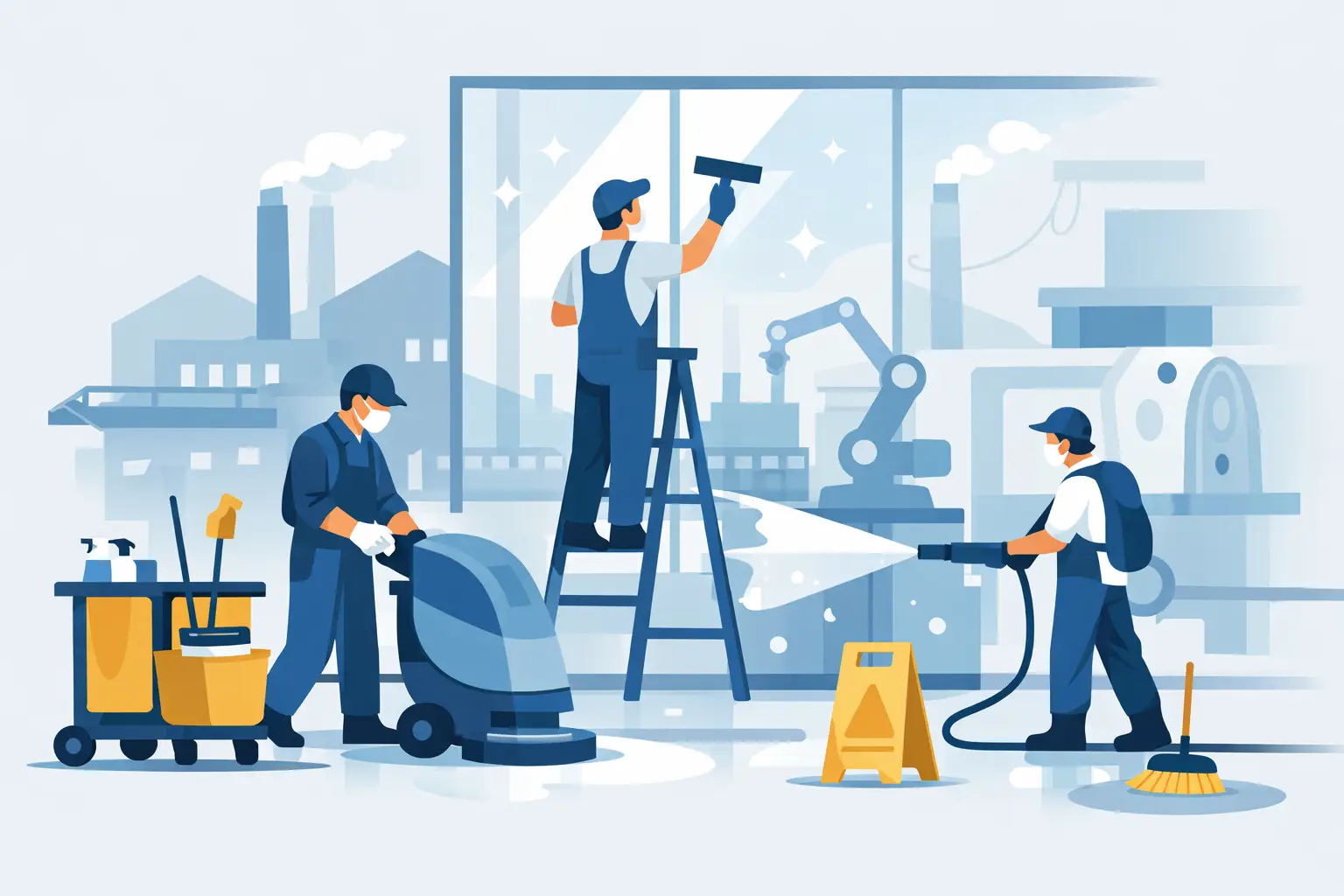
A missed spill near a production line can stop output faster than most equipment faults. In factories, cleaning is not just about appearance. It affects safety, product quality, inspections, downtime and how smoothly each shift runs. That is why a clear factory cleaning requirements guide matters for site managers, facilities teams and business owners who need standards that work in real operating conditions.
What a factory cleaning requirements guide should cover
Factory cleaning requirements vary from site to site, but the basics are usually the same. You need a clear standard for what gets cleaned, how often it gets cleaned, who is responsible and what evidence is kept. Without that structure, cleaning becomes reactive. Jobs are missed, standards drift and teams end up dealing with preventable issues such as dust build-up, slip hazards or poor washroom conditions.
In most factories, the cleaning plan needs to account for both production and non-production areas. That includes floors, welfare spaces, staff entrances, machinery exteriors, touchpoints, storage areas and waste handling points. It also means separating routine cleaning from periodic deep cleaning. If everything is labelled as urgent, nothing is managed properly.
A practical guide should also reflect the site’s actual operating pattern. A factory running one daytime shift has very different cleaning demands from a site operating around the clock. Cleaning has to fit around loading, production changeovers, maintenance windows and access restrictions.
Start with the risks, not the mop cupboard
The most common mistake in factory cleaning is treating every area the same. That creates wasted time in low-risk zones and under-servicing in critical ones. A better approach is to assess cleaning requirements by risk.
Production areas
Production spaces normally need the tightest controls. The exact standard depends on what is being manufactured, but most sites need reliable cleaning around walkways, workstations, machine surrounds and material handling routes. Dust, residue, packaging waste and spills can all affect safety and efficiency.
Where there is food production, pharmaceutical work or any controlled environment, cleaning methods will be more tightly defined. In other settings, the focus may be more on dust suppression, floor safety and keeping circulation routes clear. The right standard depends on the process, not just the building type.
Warehousing and storage zones
Storage areas are often overlooked because they appear clean enough from a distance. In practice, they can collect pallet dust, wrapping debris and dirt brought in by vehicles and foot traffic. If stock integrity matters, these areas need regular attention rather than occasional sweeping.
Staff welfare and office areas
Break rooms, toilets, changing areas and site offices shape staff experience and often influence audit impressions. They also need a different type of cleaning from industrial zones. These areas require hygiene-focused cleaning, regular consumable checks and consistent presentation. If they are neglected, complaints usually appear quickly.
External access points
Factory entrances, loading bays and external walkways affect the cleanliness of the whole site. Mud, standing water and waste at access points are then carried inside. In wet weather or high-traffic locations, external cleaning and grit management can be just as important as internal cleaning.
Set cleaning frequencies that match the operation
A factory cleaning requirements guide is only useful if the schedule is realistic. Some jobs need attention several times a day, while others can be handled weekly or monthly. The point is not to clean everything constantly. It is to match frequency to risk, traffic and operational impact.
High-traffic floors, washrooms and touchpoints may require daily or shift-based cleaning. Low-traffic storage corners might only need weekly attention. High-level cleaning, ducting surrounds, lighting and deeper floor treatment are usually periodic tasks. These should be planned in advance rather than left until conditions become obvious.
This is where many businesses benefit from a site assessment. Estimating cleaning hours without seeing the site often leads to under-resourcing. A factory with wide open floors may clean faster than a smaller site with narrow access routes, multiple welfare rooms and constant movement. Headcount alone does not tell you enough.
Define the standard for each task
Vague instructions create inconsistent results. Telling a team to clean a production area is not the same as specifying what good looks like. Each task should have a clear scope.
For example, floor cleaning may include debris removal, machine-edge cleaning, spot treatment for spills and a final check for slip hazards. Washroom cleaning may include sanitising contact points, restocking consumables, checking bins and recording completion times. If a task is measurable, it is easier to supervise and easier to improve.
That also helps when different cleaners or shifts cover the same site. Standards should not depend on who happens to be on duty. They should be set by the site requirement.
Choose methods and equipment carefully
Factory environments are rarely suitable for a one-size-fits-all cleaning method. The wrong equipment can spread dust, interfere with operations or damage surfaces. In some settings, dry cleaning methods are safer than wet ones. In others, machine scrubbing is the only practical way to maintain floor safety.
The same applies to chemicals. Products must be appropriate for the surface, the contamination and the wider site environment. Some areas need low-odour products. Others may require strict storage and handling controls. If the site has hygiene-critical processes, chemical selection becomes even more important.
There is always a balance to strike between speed and control. Fast cleaning is useful only if it does not create rework, safety issues or disruption for production teams.
Staffing levels need to reflect real demand
A factory cleaning plan can fail even when the tasks are well written. The usual reason is simple – not enough labour hours for the site. This often shows up in missed detail work, inconsistent washroom standards or cleaners being pulled from one urgent issue to another.
Staffing should reflect floor area, traffic, shift patterns, welfare provision and the type of contamination present. It should also allow for periodic work, absence cover and the fact that some tasks can only be completed in limited access windows.
For factories in Peterborough and surrounding areas, this is often where flexible out-of-hours support makes the difference. If cleaning has to happen early, late or across weekends, the contractor needs to be able to resource that reliably rather than treating it as an exception.
Documentation matters more than many sites expect
A good factory cleaning requirements guide should be usable on the ground, but it also needs to stand up to scrutiny. Whether the pressure comes from internal management, customer visits or external audits, documented cleaning standards help prove control.
That usually means having task schedules, cleaning logs, issue reporting and clear ownership for each area. It does not need to be overcomplicated. The aim is to show what was planned, what was completed and what happens if standards slip.
Sites with formal audits may need more detail, especially where hygiene or compliance is tightly regulated. Other factories may only need practical records that support daily management. Either way, undocumented cleaning is difficult to verify.
Common gaps in factory cleaning requirements
Most cleaning problems in factories come from a small number of recurring gaps. Welfare areas are under-scoped. Periodic tasks are not scheduled. External dirt is allowed to travel inside. Waste points are cleaned around but not properly managed. Cleaning teams are given broad instructions without enough site-specific detail.
Another common issue is poor coordination between production, maintenance and cleaning. If access windows are unclear, cleaning gets delayed or rushed. If nobody reports spills, dust build-up or blocked washroom consumables promptly, standards drop between scheduled visits.
The fix is usually practical rather than complicated. Define responsibilities, tighten frequencies in high-risk areas and make sure the cleaning plan reflects how the site actually runs.
When outsourced cleaning makes sense
Some factories manage cleaning in-house effectively. Others find it harder to recruit, supervise and cover absences, especially where cleaning is needed outside normal hours. Outsourced support can work well when the requirement is varied, labour cover needs to be dependable and managers want a clearer service structure.
The right contractor should be able to assess the site properly, recommend staffing levels and adapt around production. That matters more than broad promises. Factory cleaning works best when the service is built around the building, the process and the operating schedule.
For businesses that need a practical service rather than a generic package, a company like Peterborough Business Cleaners can support with site-based planning and flexible cleaning hours across different commercial environments, including factories.
Factory cleaning requirements guide: what to review regularly
Even a well-planned cleaning schedule should not be left untouched for a year. Factory conditions change. Headcount rises, layouts move, production lines expand and audit expectations shift. Cleaning standards need reviewing often enough to keep pace.
Look at complaints, incident trends, inspection findings and the amount of reactive cleaning being requested. If the same areas keep causing issues, the original plan may be too light or too vague. If the team is spending time on low-value tasks while critical areas are slipping, the schedule needs adjusting.
A useful cleaning plan is one that can cope with real factory pressure, not one that only works on paper. If your standards are clear, your frequencies are realistic and your staffing matches the site, cleaning becomes far easier to manage – and far less likely to disrupt the operation when problems appear.
Leave a Reply