
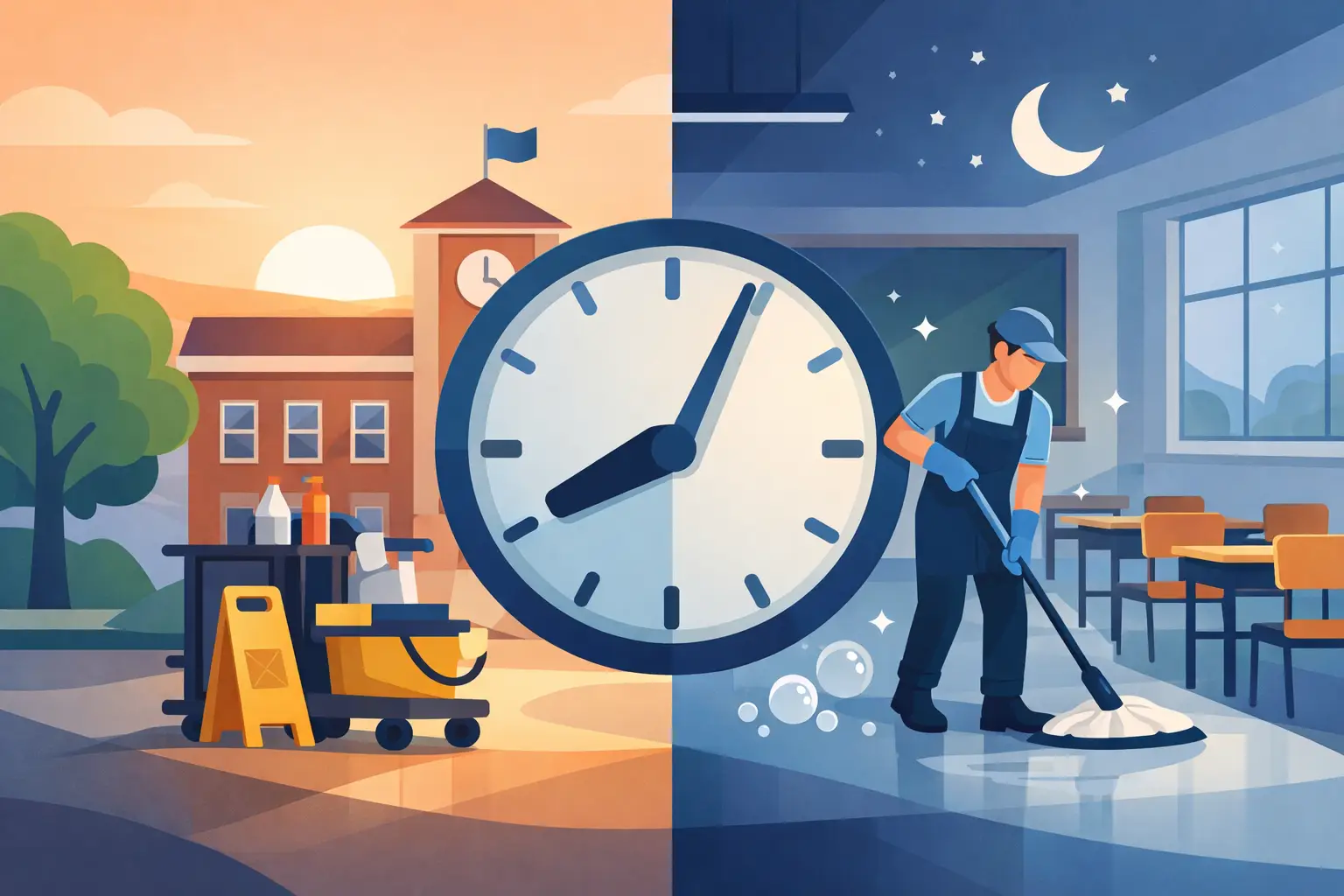
A classroom can look tidy at 3.30 pm and still be carrying a full day’s worth of germs on desks, door handles, taps and toilets. That is why the question of when should schools be cleaned is really a question about risk, timing and how the building is used. For schools, academies and site teams, the right answer is rarely one fixed cleaning slot. It is usually a planned schedule that combines daytime attention, end-of-day cleaning and deeper work during quieter periods.
When should schools be cleaned during the school day?
Schools need cleaning at different points, not just once the pupils have gone home. The busiest touchpoints start building up contamination from the first bell. Toilets, washrooms, dining areas, reception desks and door plates can all need attention while the site is still operating, especially in larger schools or sites with shared facilities.
For many settings, daytime cleaning is the practical answer where hygiene matters more than convenience. If a washroom runs out of soap, bins overflow in the lunch hall or a spill is left in a corridor, waiting until the evening is not good enough. The issue is not appearance alone. It is safety, infection control and keeping the school running without avoidable disruption.
That does not mean every school needs a full cleaning team on site all day. A small primary school may manage with spot checks by caretaking staff and a more thorough clean after hours. A larger secondary school, a SEND setting or a site with heavy community use often benefits from regular daytime support.
The case for cleaning after pupils leave
Evening cleaning is still the backbone of most school cleaning schedules. Once classrooms, offices and shared spaces are empty, cleaners can work properly without moving around lessons, lunch service or safeguarding restrictions. Floors can be vacuumed and mopped, desks wiped, bins emptied and toilets cleaned in a way that is harder to do during active school hours.
This is also the best time for routine presentation standards. A school needs to be ready for the next day before staff and pupils arrive. That means entrances looking presentable, classrooms reset, washrooms stocked and hard floors free from tracked-in dirt.
For most schools, the daily evening clean should cover classrooms, corridors, reception areas, staff rooms, offices, toilets and any regularly used communal spaces. Depending on the site, it may also include sports changing areas, library zones and canteen seating areas. The size of the building, age range of pupils and volume of use all affect how much time is needed.
The trade-off is straightforward. Evening-only cleaning is often more efficient and less disruptive, but it can leave a gap during the day if there is no one available to deal with urgent mess, hygiene issues or weather-related dirt brought in from outside.
Daily, weekly and termly cleaning are not the same thing
One of the main mistakes in school cleaning is treating every area as if it needs the same frequency. It does not. Some parts of the building need daily attention because they carry the highest hygiene risk. Others can be handled weekly or on a rotational basis.
Daily tasks usually include toilets, washrooms, classroom touchpoints, floors in high-traffic areas, bins, staff facilities and entrances. These are the basics that keep the site usable and safe.
Weekly cleaning often covers areas that matter but do not need full attention every single day, such as lower-traffic offices, internal glass, skirting edges, dusting of higher reachable surfaces and a more detailed floor treatment in less used spaces.
Termly cleaning is where schools can deal with build-up that routine cleaning will not fully address. That may include machine scrubbing, carpet deep cleaning, descaling washrooms, high-level dusting, internal partition glass, vents, behind furniture and detailed work in science rooms, food technology spaces or sports facilities.
This layered approach is usually more realistic than asking an evening team to do everything every night. It also helps site managers control standards without overpaying for unnecessary labour in low-use areas.
School holidays matter more than people think
If you are deciding when should schools be cleaned more thoroughly, the school holidays are usually the right answer. Half-term, Christmas, Easter and summer breaks give access to spaces that are harder to clean properly when lessons are running. Furniture can be moved, floors can be treated properly and whole sections of the site can be worked through without interruption.
The summer break is usually the best window for larger projects. That is the time for deep classroom cleans, floor stripping and sealing where needed, carpet extraction, high dusting, internal windows, wall spot cleaning and detailed sanitation of washrooms and kitchens. If any repainting, maintenance or refurbishment has been carried out, post-works cleaning may also be needed before the new term starts.
Shorter breaks are still useful, but expectations need to be realistic. A one-week half-term is enough for targeted deep cleaning in priority areas, not always for a full-site overhaul. The right plan depends on budget, condition and whether the building is used for holiday clubs or community bookings.
High-risk areas need more frequent cleaning
Not every part of a school carries the same operational pressure. Toilets, medical rooms, changing areas, food service areas and reception points usually need the closest attention. These are the places where cleanliness affects safeguarding, public confidence and day-to-day usability most directly.
Dining halls and food prep areas can require multiple cleans around service times, particularly where breakfast clubs, lunch sittings and after-school provision are all running from the same space. Likewise, nurseries and early years environments often need more regular sanitising because of the way children interact with surfaces, equipment and soft furnishings.
Then there is weather. In autumn and winter, entrances and corridors can become difficult quickly. Mud, rainwater and leaves bring a different cleaning requirement from the dry months. A school that copes well in June may need extra floor attention in November just to stay safe and presentable.
Frequency should match how the building is used
A school with 200 pupils and limited after-hours use needs a different schedule from a large academy, an independent school with boarding facilities or a campus with sports lettings every evening. Usage changes everything. It affects footfall, wear on floors, washroom demand and the amount of litter and spill response required.
Community use is often overlooked. If halls, sports spaces or meeting rooms are hired out in the evening or at weekends, cleaning may need to happen both before and after those sessions. Otherwise, Monday morning standards can quickly slip, even if the weekday routine looks fine on paper.
This is why cleaning schedules work best when they are built around the timetable, not copied from another site. A good plan looks at pupil numbers, room types, traffic flow, staffing access, safeguarding procedures and any known pressure points.
Signs your school is not being cleaned at the right times
Timing problems usually show up before a school fails a full cleanliness check. Complaints about toilets by midday, wet entrance floors, overflowing bins after lunch, dusty classroom edges and tired-looking reception areas are all signs that the cleaning window may be wrong, even if the team is working hard.
Another warning sign is when cleaners are always chasing visible mess but never getting to detail work. That often means the site needs either more frequent daytime support, more hours after school, or a planned deep-clean programme during term breaks.
Poor timing can also create pressure on school staff. Teachers and support teams should not be wiping desks, emptying bins or managing washroom standards because the cleaning schedule does not match reality. A proper commercial plan should reduce that burden, not shift it elsewhere.
What a practical school cleaning schedule looks like
For many schools, the most effective arrangement is a mixed model. Daytime support covers urgent issues, washroom checks and high-traffic hygiene points. After-school cleaning handles the daily reset. Holiday periods take care of the deeper work that protects long-term standards.
That model can be scaled up or down. Some sites only need a few daytime checks and a strong evening clean. Others need broader coverage because of pupil numbers, building size or extended use. The point is not to buy more cleaning than necessary. It is to place the hours where they make the biggest operational difference.
For schools in Peterborough and the surrounding PE areas, that often means arranging cleaning around safeguarding access, caretaker schedules and term-time pressures rather than forcing a rigid package onto the site. A site visit is usually the simplest way to judge what is realistic.
The right time to clean a school is whenever cleaning prevents disruption rather than reacts to it. If the building is clean before issues are noticed, the schedule is doing its job.
Leave a Reply